The Art of the Phin: Sisterhood, Heritage, and the Rise of Tí Cafe
Mary Jeneverre Schultz • March 1, 2026

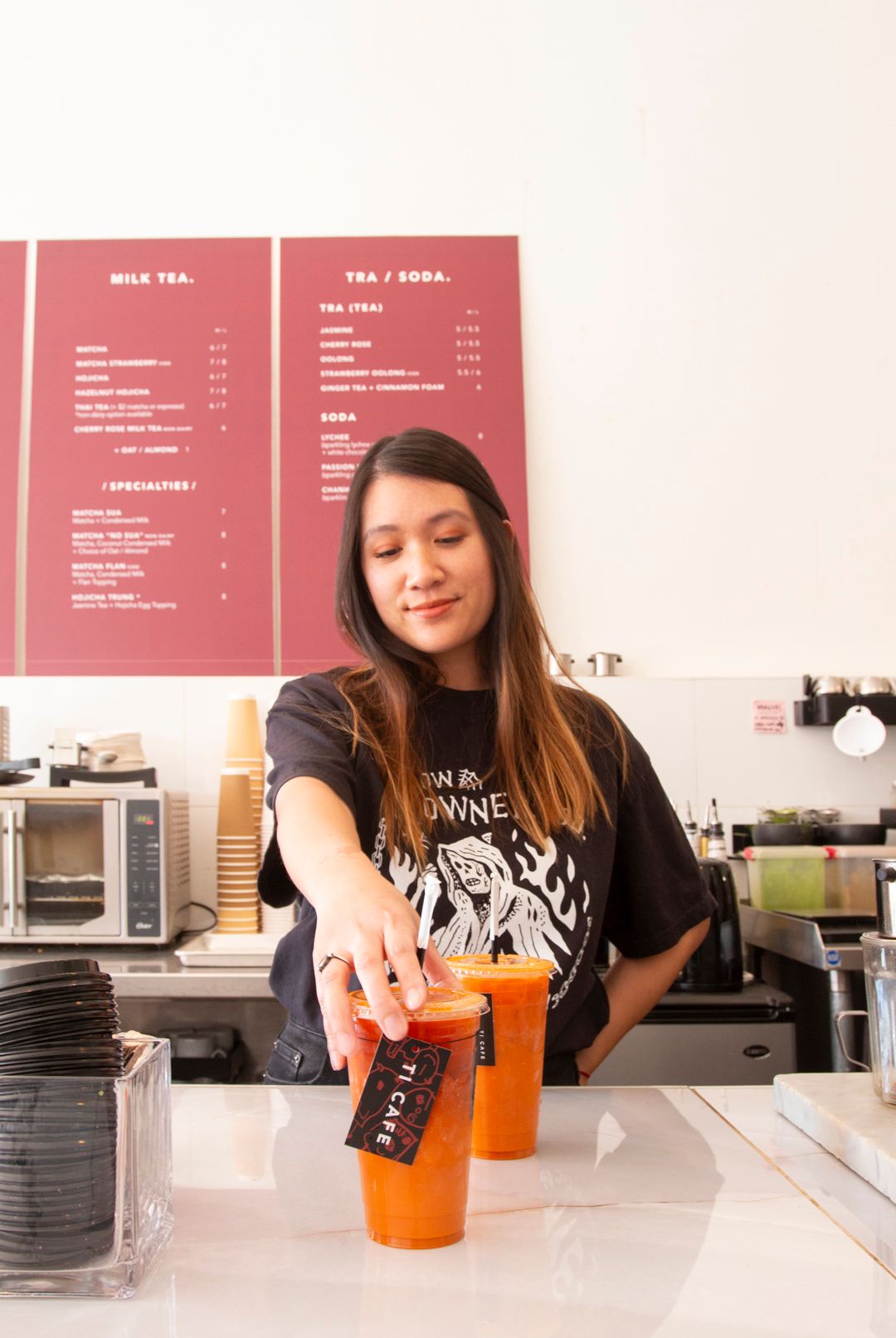
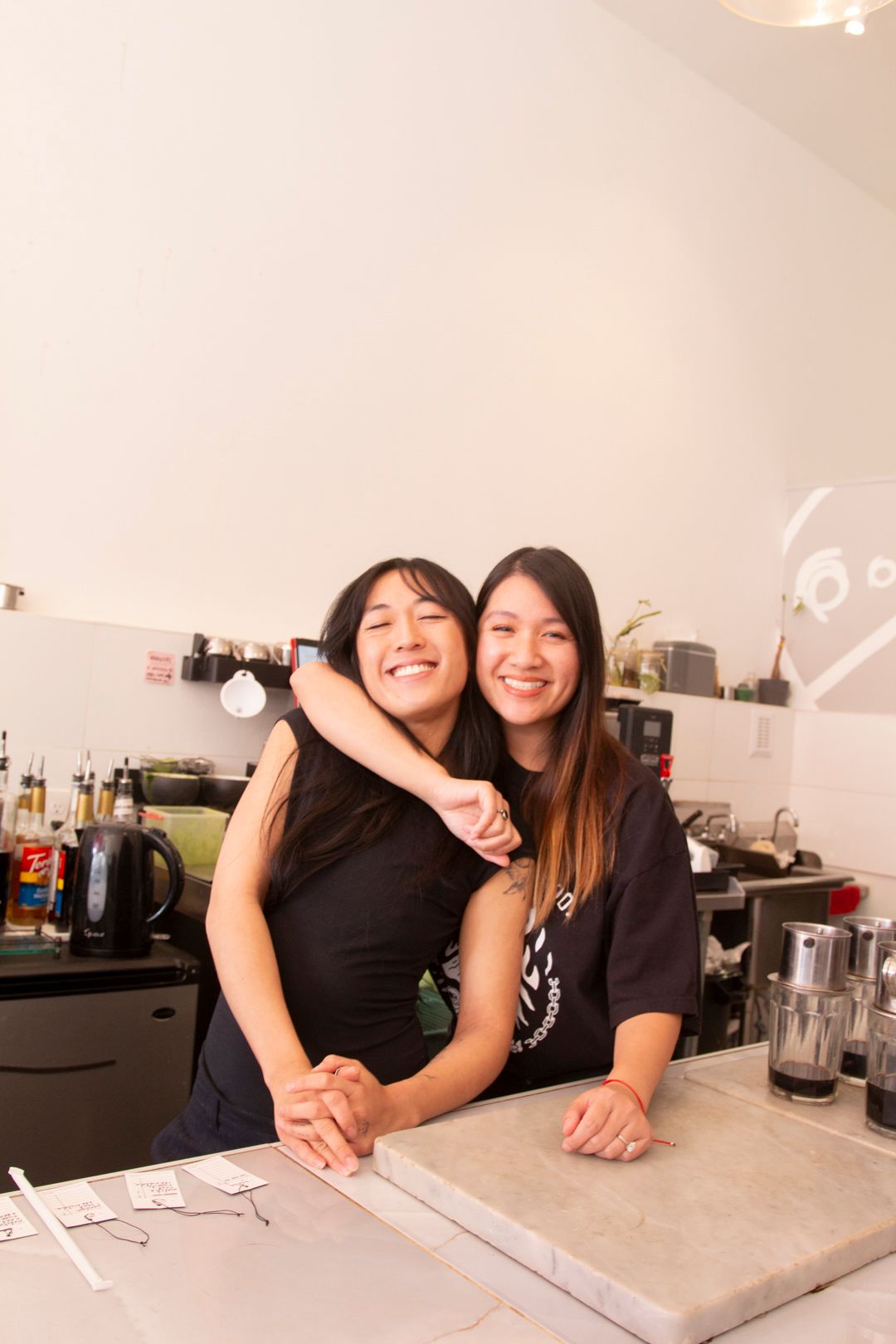
In the bustling landscape of Denver’s specialty coffee scene, Tí Cafe stands as a vibrant anomaly. Located on South Broadway, the shop is more than a caffeine pitstop. At the helm are three sisters—Sashaline, Shominic, and Shasitie Nguyen—who have successfully translated their Vietnamese-American heritage into one of the city’s most influential community hubs.


A Shared Vision Rooted in Identity

The genesis of Tí Cafe was not a sudden pivot but a slow-brewing realization. Growing up as the daughters of Vietnamese immigrants, the sisters were raised in a household where entrepreneurship was the primary language of survival and success. By 2006, after relocating to Denver, they noticed a stark lack of cultural visibility for Asian Americans in the mile high area.


“Tí Cafe began as a shared dream rooted in representation and identity,” the sisters explained. “As Vietnamese-American sisters raised by entrepreneurial parents, we always imagined creating something purposeful together. The idea of separating at adulthood felt almost alien.”


Before the cafe, the three were building distinct careers. Sashaline, 36, was navigating the high-stakes world of craft cocktails as a lead bartender at Welton Room. Shominic, 31, was established as a Creative Director for a Breckenridge-based brand studio, and Shasitie, 27, was honing her expertise in networking and brand experience as a personal stylist. Despite their individual successes, the pull of a unified legacy was stronger. They chose to consolidate their diverse skill sets into a single, formidable vision.


The Power of Three: Roles and Realities

The sisters have categorized their roles into three essential pillars: the Dreamer, the Organizer, and the Fixer.


  • The Dreamer (Shominic): Serving as the Creative and Brand Content Director, Shominic is the architect of the “vibe.” Her background in UI/UX and design allows her to conceptualize menu themes and visual storytelling inspired by art and anime. She ensures that the customer experience is not just transactional, but imaginative.


  • The Organizer (Shasitie): Every visionary needs a pragmatist. Shasitie is the operational backbone. She creates the systems, manages logistics, and oversees the scheduling that allows a small, family-run business to function with the efficiency of a major corporation.


  • The Fixer (Sashaline): Occupying the “eldest sister” role both literally and figuratively, Sashaline is the primary problem-solver. Whether it’s a technical hiccup behind the bar or a complex business negotiation, her adaptability and level-headedness keep the ship steady during the inevitable storms of small business ownership.


“Even though we’re sisters, we’re three very different people,” they noted. “That dynamic of creativity, structure, and adaptability is the reason we can carry such heavy workloads and still stay motivated.”

Honoring the Tradition of the Phin

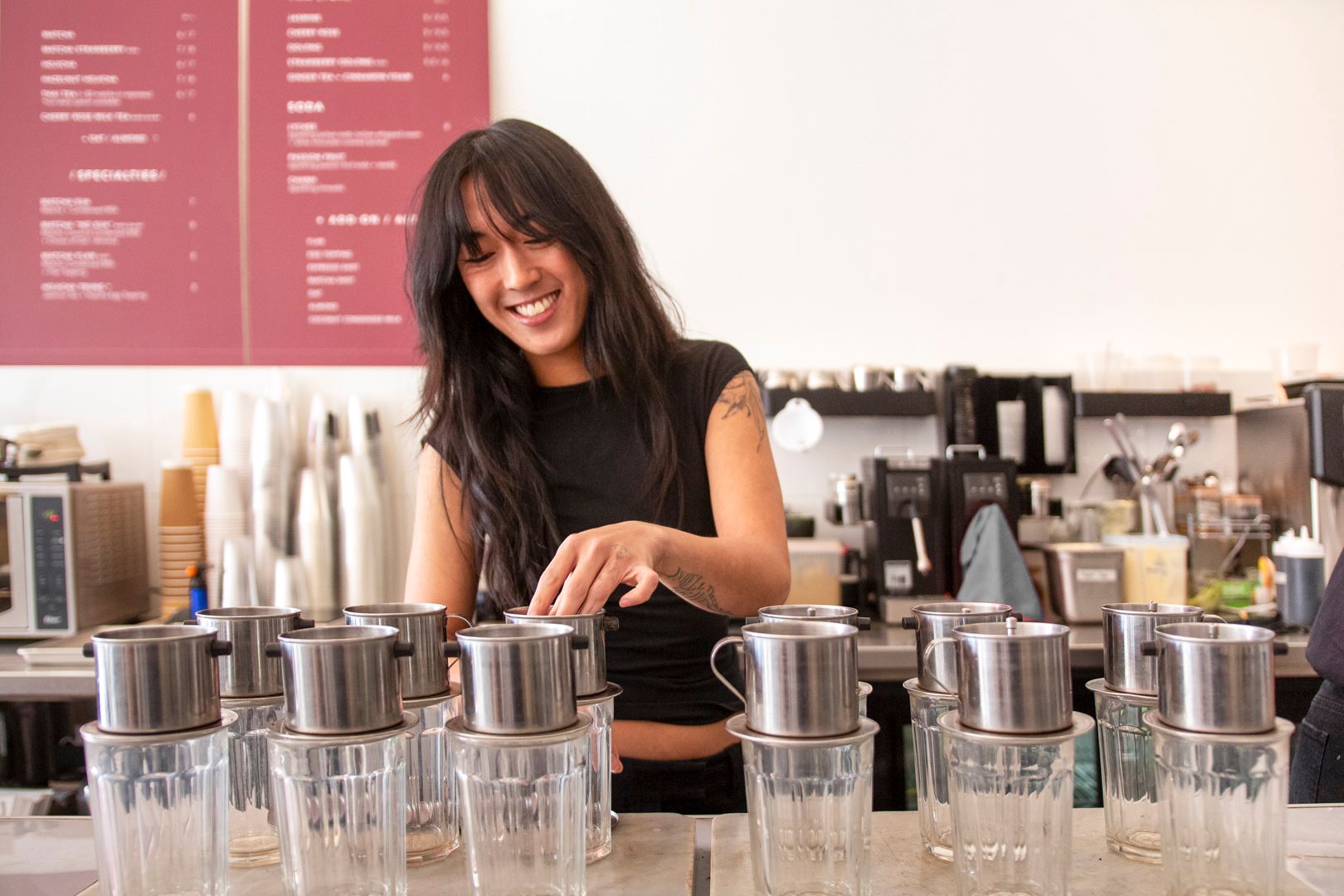
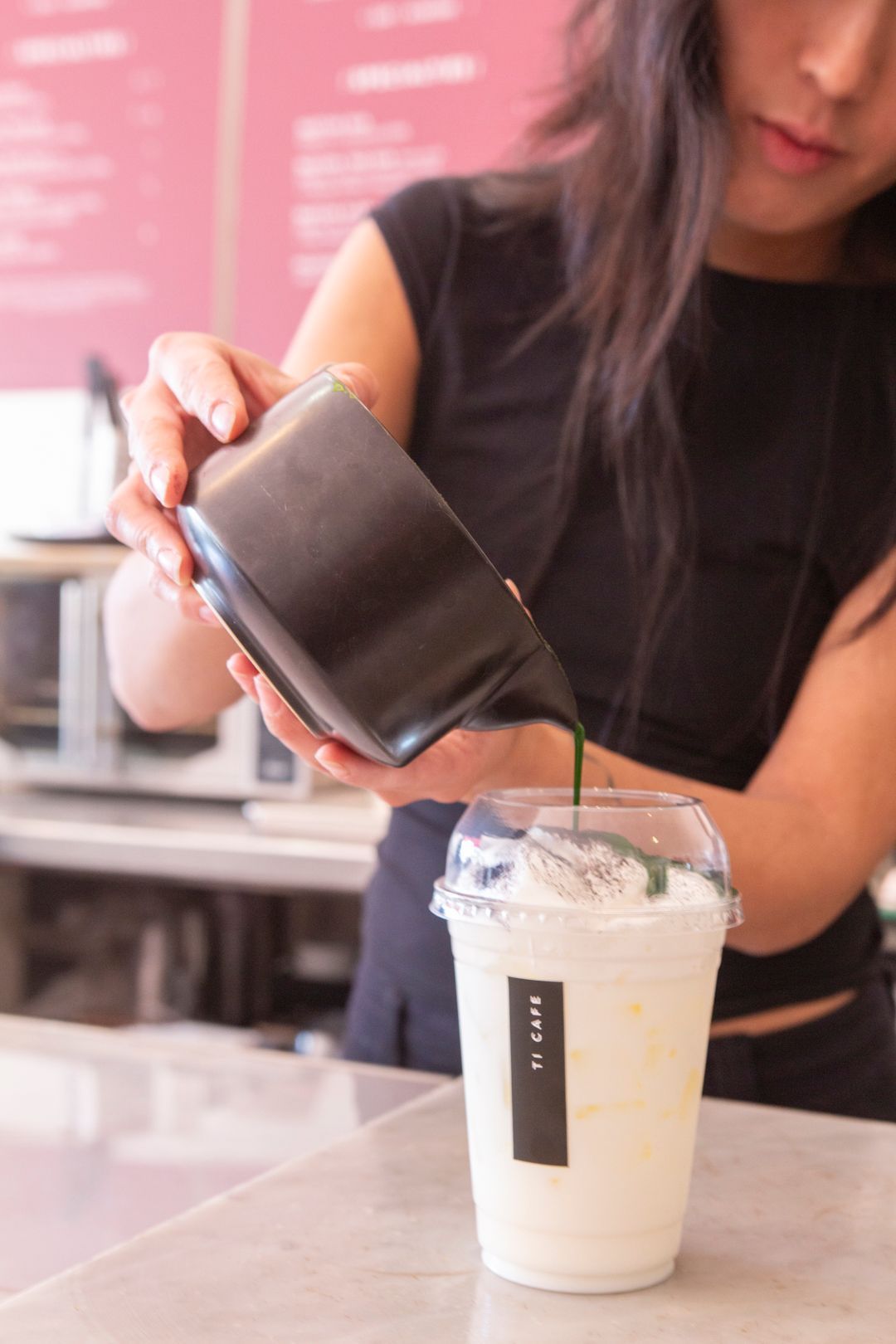
At the heart of their menu is a commitment to authenticity that refuses to be “modernized” for a Western palate. They use robusta beans imported directly from Vietnam and brew their espresso using the traditional phin—a metal slow-drip filter—rather than standard commercial machines.


The menu features ingredients that many Asian Americans recognize as the “flavors of home”: pandan, flan, mooncakes, and the savory pate chaud. For the Nguyen sisters, providing these flavors is an emotional mission.


“Hearing someone say, ‘I haven’t had this since I visited Vietnam,’ is the highest compliment we could receive,” they shared. “We know how grounding a familiar flavor can be, especially in a city where Asian food culture was once limited.”


As a woman-owned, family-run business, their leadership style is an extension of Vietnamese hospitality: it is familial rather than transactional. They don’t just serve a drink; they educate. They share the history of the ingredients and the stories behind the recipes.


The Evolution of Sisterhood

“Being a woman-owned business in Denver is incredibly empowering,” they confessed. “It symbolizes the determination to carve out space where it didn’t always exist. Our approach comes from a household where food was our love language and togetherness were non-negotiable.”


The sisters have transitioned from “growing up together” to building a future together. They acknowledge that the stakes are higher now—every decision impacts all three of them—but the reward is a deepened bond.


To avoid burnout, they make a conscious effort to celebrate progress rather than dwelling on challenges. They gather outside the shop for meals and activities, ensuring that the “sisterhood” remains the priority over the “business.”


The sisters say: “Always trust your vision, even if it feels unfamiliar or risky. You don’t need to be good at everything to start—you just need clarity on what you bring to the table and what support you need along the way.”


As Tí Cafe continues to grow as a hub for local artists and creators, it fulfills the sisters’ original goal: creating the space they wished they had growing up.

Follow and connect with Ti Café on Instagram at @ti.cafe.

See their menu at ti.cafe.

Discover More Features

By Ashtonn Means April 1, 2026
Rocky Mountain Public Media , the home of Rocky Mountain PBS, KUVO Jazz, and TheDrop303 has a partnership with Colorado Ethnic Media Exchange to launch this monthly essay series, as part of our vision to co-create a Colorado where everyone feels seen and heard. These stories are sourced from community members across the state—told in their own words and selected from our 64-county community ambassador program. They are not editorial products of our journalism team, but are first-person reflections on life in Colorado - building bridges through empathy. Learn more about all of our brands and content at www.rmpbs.org/about .
By Gil Asakawa April 1, 2026
When people discover Boxtastic at Denver International Airport, they’re often drawn in by the bright displays, colorful characters, and the excitement of opening a “blind box.” Behind that experience is Michael Ye, quietly building and shaping the vision of Boxtastic alongside his wife, Mimi Luong Ye. While Mimi is often the face of the brand—connecting with the community, sharing stories, and bringing energy to events—Michael is the one carefully crafting what Boxtastic is becoming. In 2024, he noticed a growing trend while running their family gift shop, Truong An Gifts, in Denver. Labubu dolls made by Pop Mart, a Beijing-based toy company, had become an explosive fad. Pop Mart sells the line of various Labubus in a “collect them all” ethos of blind boxes, in which the exact item inside is a surprise until it’s open. Then consumers keep buying them to collect the other ones. Labubus became Pop Mart’s biggest worldwide hit. After Truong An’s Labubu popularity and long lines waiting outside their gift shop door caught the attention of Denver International Airport, the Ye’s came up with Boxtastic, which was more open-ended and not tied to just the Labubu fad. Like a spinoff for a hit television show, Boxtastic, is inspired by the blind boxes that generate repeat purchases.  “It’s kind of become the thing that I love,” Ye says of the Truong An-inspired world of retail. “And Boxtastic is just a version of that. It’s a spin-off.”
By Dr. Esther Park April 1, 2026
For Dr. Esther Park, the path to becoming a psychologist wasn’t linear—it was deeply personal. Like many children of immigrants, she grew up with a clear expectation: become a doctor or a lawyer. “For a while, I believed I would be a pediatrician,” she recalls. “But on the first day of organic chemistry in college, I quickly realized medical school wasn’t for me.” What followed was a quiet but powerful shift. Park gravitated toward psychology, initially without a clear end goal. “Looking back, I can see that I was drawn to it for deeply personal reasons,” she says. “There was something I wanted to understand about myself, my upbringing, and the dynamics that shaped me.” That curiosity eventually led her to earn a doctorate in clinical psychology and continue her training at the Denver Institute for Psychoanalysis. Dr. Park describes her identity as a 1.5 generation Korean American as central to her work. “I understand, intimately, what it feels like to belong and to feel ‘other’—sometimes in the very same moment,” she explains. Holding both Western and Korean values has created what she calls a “dual identity,” shaped by autonomy and self-definition on one hand, and sacrifice, duty, and collective identity on the other. This duality brings both gratitude and grief. “I carry gratitude for the immense sacrifices my parents made… But I also carry a lot of grief. The grief of recognizing that my freedom is, in many ways, built on their limitation.” These layered emotions inform how she approaches her patients—with nuance, curiosity, and compassion. “I don’t see mental health symptoms in isolation. I see them within cultural systems, generational trauma, and the psychological weight of belonging.” Dr. Park emphasizes that many mental health challenges—like anxiety, depression, and perfectionism—are often rooted in intergenerational experiences. “We do not start from scratch,”she says. “We are shaped not only by our own experiences, but by the emotional histories of the generations before us.” In immigrant families, survival stories often translate into internal pressures: achieve, don’t fail, make it worth it. “These messages are often rooted in love,” she adds, “and yet, they can become internal pressures that shape identity in profound ways.” Starting her own private practice was another intentional step in reclaiming autonomy. “I wanted the freedom to build a practice that reflected my values,” Park says. “My parents immigrated to this country without the luxury of time…Because of that, I’ve come to see time as one of the most valuable forms of wealth.” Her work, grounded in psychodynamic and psychoanalytic therapy, goes beyond symptom relief. It invites deeper self-exploration and lasting change. “Many of the individuals I work with are interested in understanding themselves at a deeper level—not only to improve their own lives, but to change patterns that may have existed across generations.” It gives Dr. Park hope that “more individuals are beginning to ask deeper questions about themselves—not just what they feel, but why.” She hopes more people can see self-understanding not as a weakness, but as courage.