New Roots, New Perspective: The Rewards of Hosting Internationally
Jessica Moy • February 1, 2026

Have you ever thought about hosting an exchange student? There are so many benefits to having an international student stay in your home. This article shares a few of those rewards, along with some program options to help you get started.


A Childhood Shaped by the World

Growing up, my family hosted a total of seven exchange students for periods ranging from a couple of weeks to an entire year. Four were from Japan (as I was learning Japanese), two were from France (as my sister was learning French), and one was from Brazil.


Not only did they have a great experience learning American culture, but my family got to see the world through their eyes. I was only seven when we hosted our first student, and it was my first glimpse into life in a different country. I remember how many everyday things were brand new to them. 


One host sister from Japan had never seen high schoolers wearing nail polish because it wasn’t allowed at her school. She also came from a household with an arranged marriage and found it fascinating that people here could choose who they wanted to date. 


Another student had never seen snow and reacted like a little kid playing in a fresh snowfall. These moments taught me early on that people grow up with different perspectives—and that is a beautiful thing.


Passing the Tradition to the Next Generation

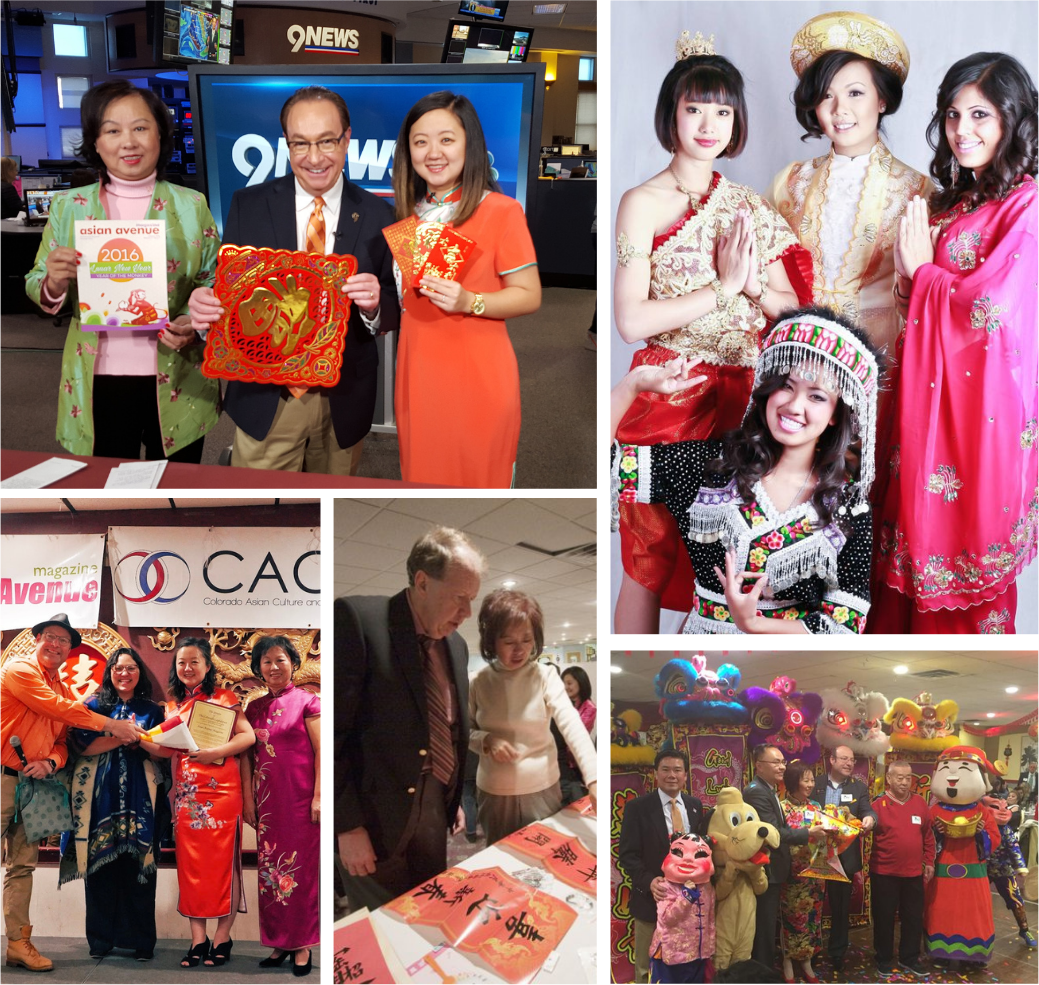
Now that I have a family of my own, I continue to see hosting as a beneficial experience for my children. Our first hosting experience together was with Colorado Asian Culture and Education Network’s (CACEN) American Cultural Study Tour and Exchange Program with students from Kunming, China. Two boys stayed with us for a few days, which was a perfect way to get my kids acclimated to having someone new in the house.


Since then, our home has been a revolving door of international friendship. We have hosted:


  • An older Japanese gentleman through 4H International Exchange
  • A Chinese teacher with a high school exchange program
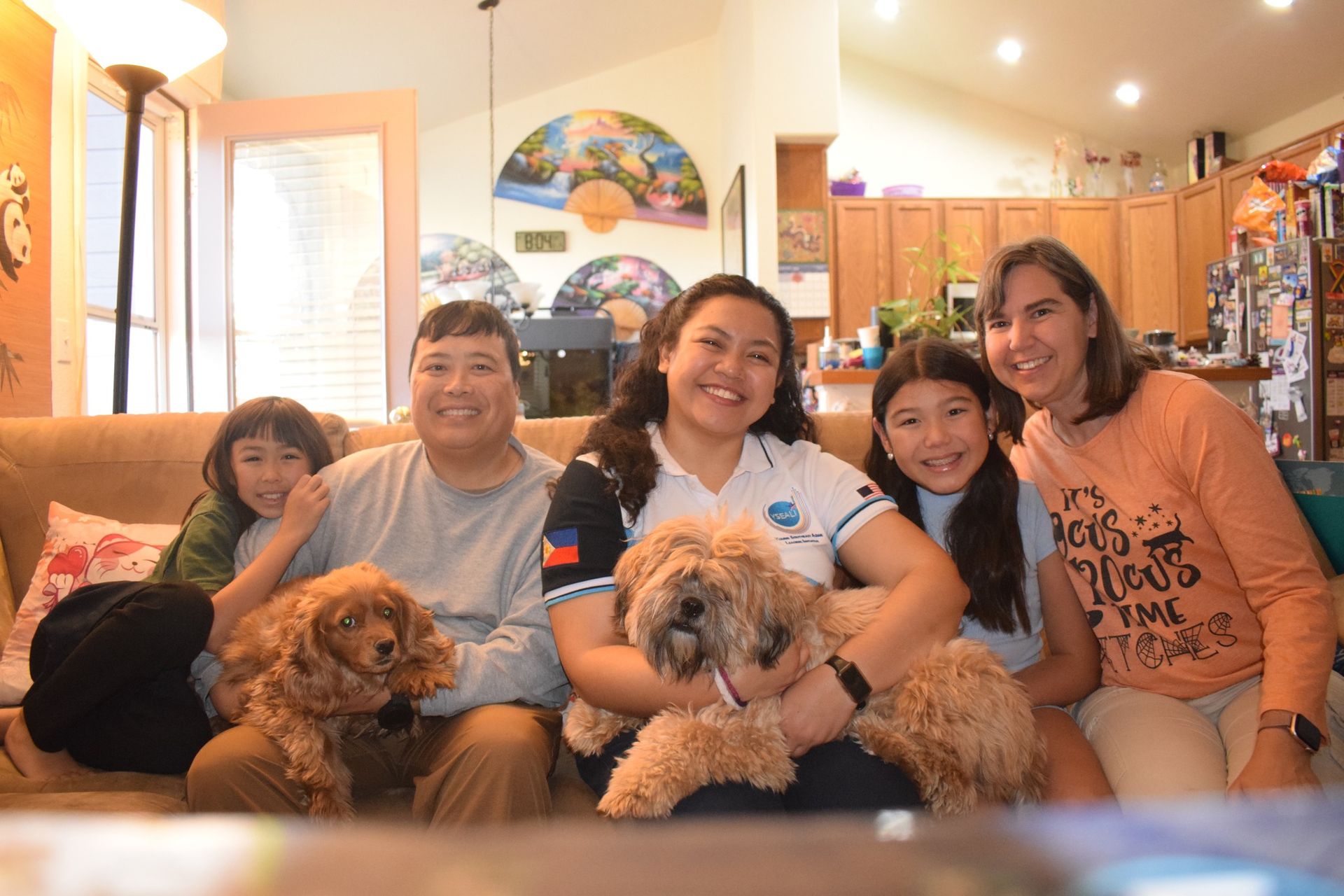
  • A Filipino woman with WorldDenver
  • Currently, a Chinese student in his junior year of high school via ABC Hosting


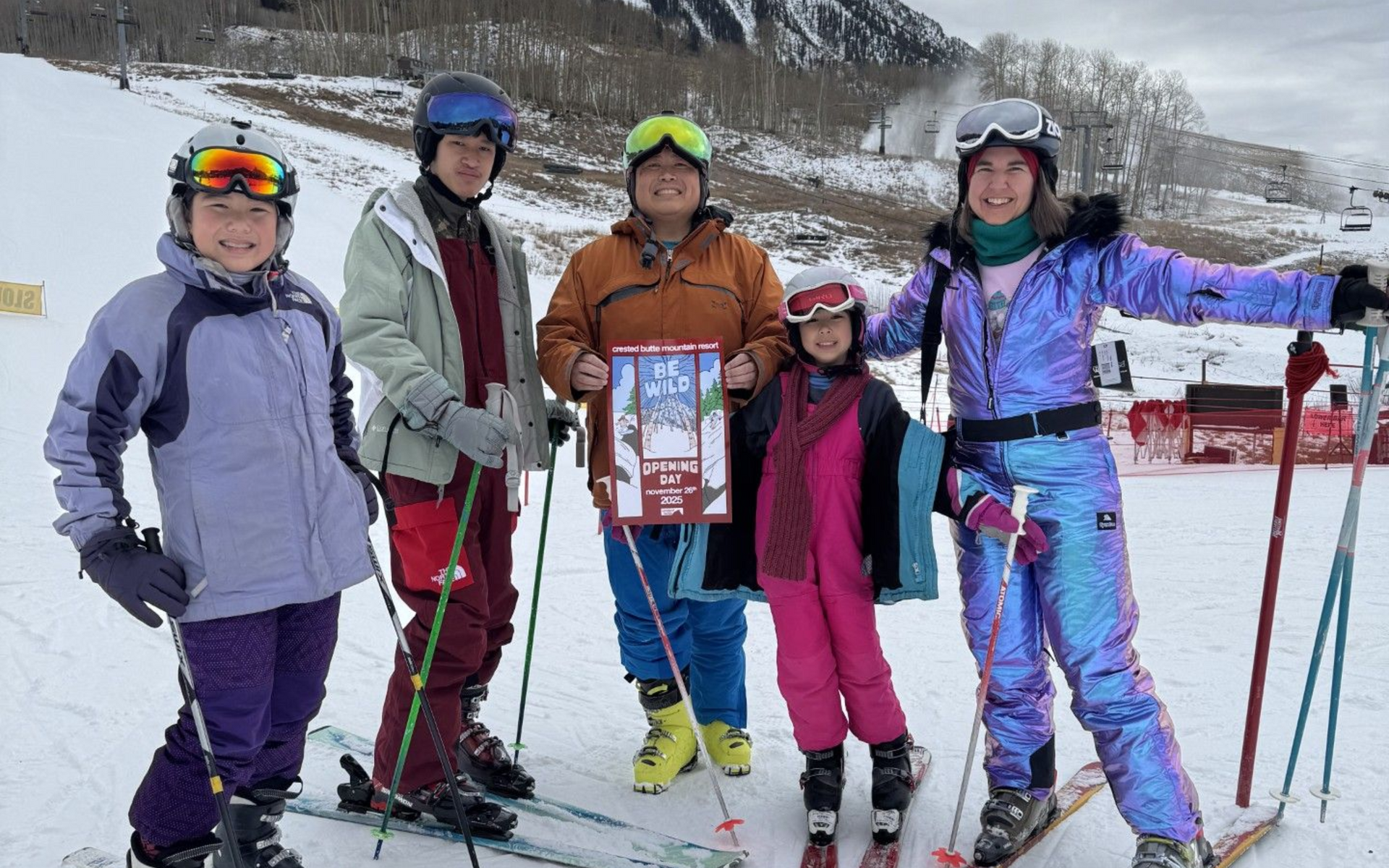
Each time, my kids have embraced them as family. We’ve taken our guests to iconic Colorado spots like Red Rocks, Garden of the Gods, Carbondale, Crested Butte, and Telluride. 


There is something magical about watching your children interact with an “international sibling” and hearing them ask innocent questions to learn about the world.

Connections That Last a Lifetime

I have stayed in touch with almost every single one of our past exchange students and have had the opportunity to visit several of them multiple times. I consider them family in a different country and enjoy watching our families grow as we age. Having also participated in exchange programs to Japan when I was younger, I can say firsthand: these experiences are life-changing.


Open Your Home to the World

Are you ready to create lifelong memories and global connections? Hosting an exchange student is more than just providing a room; it’s about building a bridge between cultures.


How to get started:

  • Research Programs: Explore organizations like WorldDenver, 4H International Exchange, Youth for Understanding, High School USA, or CACEN to find a program that fits your family’s lifestyle.
  • Start Small: Consider a short-term hosting opportunity (a few days to a week) to see if it’s right for you.
  • Learn More: Contact a local exchange coordinator to learn about students looking for a home in your area.


Reach out to Jessica via Facebook (fb.com/jessica.moy.731 ) for more information. 

Discover More Features

By Ashtonn Means April 1, 2026
Rocky Mountain Public Media , the home of Rocky Mountain PBS, KUVO Jazz, and TheDrop303 has a partnership with Colorado Ethnic Media Exchange to launch this monthly essay series, as part of our vision to co-create a Colorado where everyone feels seen and heard. These stories are sourced from community members across the state—told in their own words and selected from our 64-county community ambassador program. They are not editorial products of our journalism team, but are first-person reflections on life in Colorado - building bridges through empathy. Learn more about all of our brands and content at www.rmpbs.org/about .
By Gil Asakawa April 1, 2026
When people discover Boxtastic at Denver International Airport, they’re often drawn in by the bright displays, colorful characters, and the excitement of opening a “blind box.” Behind that experience is Michael Ye, quietly building and shaping the vision of Boxtastic alongside his wife, Mimi Luong Ye. While Mimi is often the face of the brand—connecting with the community, sharing stories, and bringing energy to events—Michael is the one carefully crafting what Boxtastic is becoming. In 2024, he noticed a growing trend while running their family gift shop, Truong An Gifts, in Denver. Labubu dolls made by Pop Mart, a Beijing-based toy company, had become an explosive fad. Pop Mart sells the line of various Labubus in a “collect them all” ethos of blind boxes, in which the exact item inside is a surprise until it’s open. Then consumers keep buying them to collect the other ones. Labubus became Pop Mart’s biggest worldwide hit. After Truong An’s Labubu popularity and long lines waiting outside their gift shop door caught the attention of Denver International Airport, the Ye’s came up with Boxtastic, which was more open-ended and not tied to just the Labubu fad. Like a spinoff for a hit television show, Boxtastic, is inspired by the blind boxes that generate repeat purchases.  “It’s kind of become the thing that I love,” Ye says of the Truong An-inspired world of retail. “And Boxtastic is just a version of that. It’s a spin-off.”
By Dr. Esther Park April 1, 2026
For Dr. Esther Park, the path to becoming a psychologist wasn’t linear—it was deeply personal. Like many children of immigrants, she grew up with a clear expectation: become a doctor or a lawyer. “For a while, I believed I would be a pediatrician,” she recalls. “But on the first day of organic chemistry in college, I quickly realized medical school wasn’t for me.” What followed was a quiet but powerful shift. Park gravitated toward psychology, initially without a clear end goal. “Looking back, I can see that I was drawn to it for deeply personal reasons,” she says. “There was something I wanted to understand about myself, my upbringing, and the dynamics that shaped me.” That curiosity eventually led her to earn a doctorate in clinical psychology and continue her training at the Denver Institute for Psychoanalysis. Dr. Park describes her identity as a 1.5 generation Korean American as central to her work. “I understand, intimately, what it feels like to belong and to feel ‘other’—sometimes in the very same moment,” she explains. Holding both Western and Korean values has created what she calls a “dual identity,” shaped by autonomy and self-definition on one hand, and sacrifice, duty, and collective identity on the other. This duality brings both gratitude and grief. “I carry gratitude for the immense sacrifices my parents made… But I also carry a lot of grief. The grief of recognizing that my freedom is, in many ways, built on their limitation.” These layered emotions inform how she approaches her patients—with nuance, curiosity, and compassion. “I don’t see mental health symptoms in isolation. I see them within cultural systems, generational trauma, and the psychological weight of belonging.” Dr. Park emphasizes that many mental health challenges—like anxiety, depression, and perfectionism—are often rooted in intergenerational experiences. “We do not start from scratch,”she says. “We are shaped not only by our own experiences, but by the emotional histories of the generations before us.” In immigrant families, survival stories often translate into internal pressures: achieve, don’t fail, make it worth it. “These messages are often rooted in love,” she adds, “and yet, they can become internal pressures that shape identity in profound ways.” Starting her own private practice was another intentional step in reclaiming autonomy. “I wanted the freedom to build a practice that reflected my values,” Park says. “My parents immigrated to this country without the luxury of time…Because of that, I’ve come to see time as one of the most valuable forms of wealth.” Her work, grounded in psychodynamic and psychoanalytic therapy, goes beyond symptom relief. It invites deeper self-exploration and lasting change. “Many of the individuals I work with are interested in understanding themselves at a deeper level—not only to improve their own lives, but to change patterns that may have existed across generations.” It gives Dr. Park hope that “more individuals are beginning to ask deeper questions about themselves—not just what they feel, but why.” She hopes more people can see self-understanding not as a weakness, but as courage.