Ambassador64 Notes from The Western Slope
JJ Caric • August 1, 2025

Rocky Mountain Public Media, the home of Rocky Mountain PBS, KUVO Jazz, and TheDrop303 has a partnership with Colorado Ethnic Media Exchange to launch this monthly essay series, as part of our vision to co-create a Colorado where everyone feels seen and heard. 


These stories are sourced from community members across the state—told in their own words and selected from our 64-county community ambassador program. They are not editorial products of our journalism team, 

but are first-person reflections on life in Colorado - building bridges through empathy. Learn more about all of our brands and content at www.rmpbs.org/about


We’re starting the series with a piece written by one of our team members, JJ Caric, who relocated to Grand Junction over two years ago for a job with us and found so much more…

I was born in May of 1997 in a rural town in Southern China. Time unknown. Weight unknown. Length unknown. First fifteen months of life unknown. 


In August of 1998, I was adopted by Italian and German parents from Pittsburgh, Pennsylvania. My parents were and are the best parents that could’ve adopted me. I found support in every corner of my life growing up. 


However, a throughline of my childhood, teen years, and still sometimes in my adulthood is the resistance and refusal to acknowledge my Chinese background. Jokes were made to my friends that I was 100% Italian and 0% Asian. Arguments were had between my mom and me about not wanting to go to Chinese dance class and instead go to cheerleading, or gymnastics, or any other activity like all the other girls my age attended. 

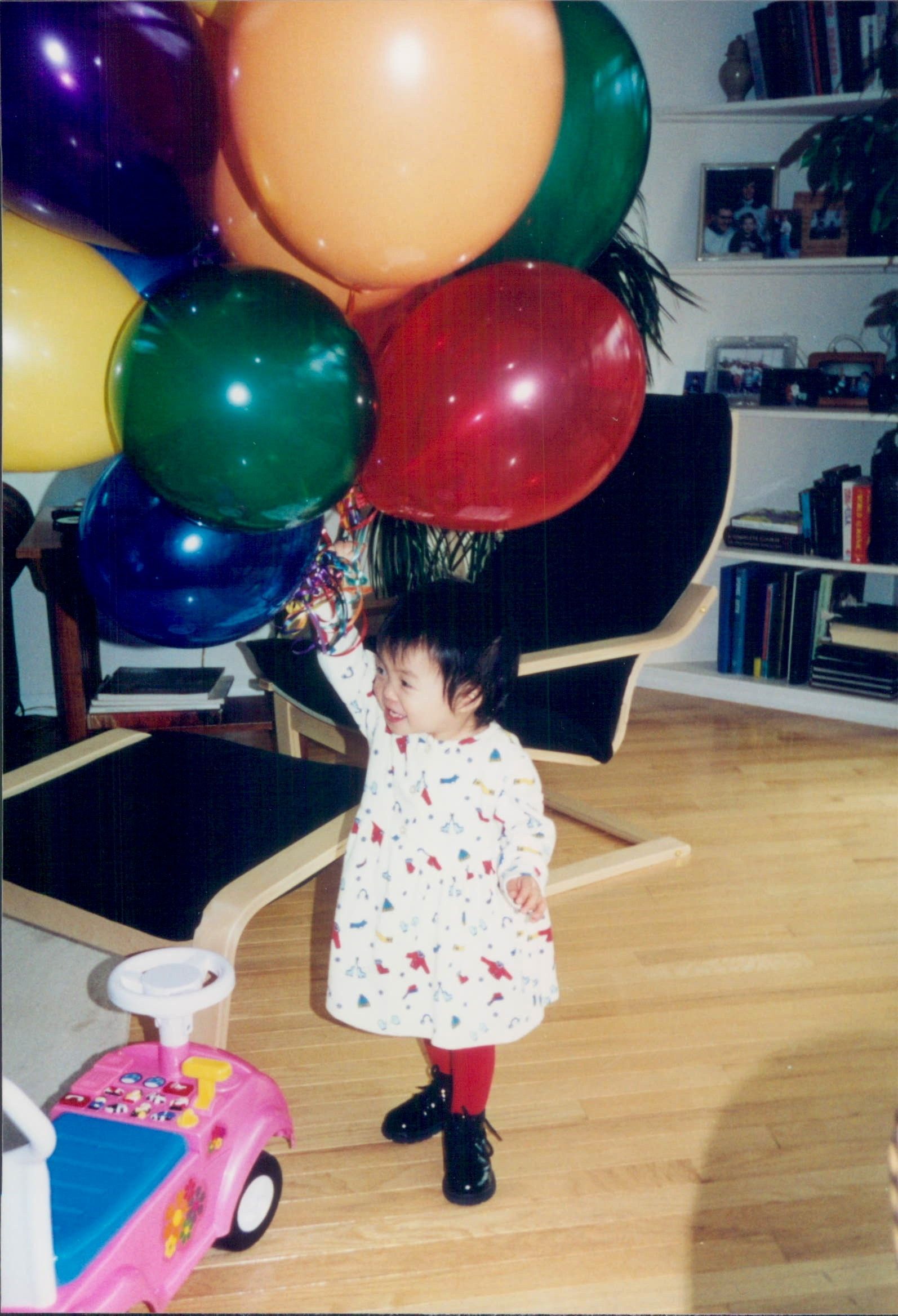
Young child in a dress holds a bunch of colorful balloons, standing by a pink toy car.

Growing up, I also only surrounded myself and became friends with white kids, thinking that was popular, mainstream, accepted, and beautiful. Not accepting my natural hair, I dyed it blonde from the age of 13 until this past year, when I was 28. 


During this time of life, I also resisted and hated living in Pittsburgh. Pittsburgh wasn’t a “real” city…I was destined for Los Angeles or New York City, which were the only cities where I applied to college. I ended up going to New York for my first year. 


Maybe it was the movies I watched as a kid, but ever since I was little, New York was like a fever dream. It was exciting, fast, entertaining, glamorous, and full of energy. 


Quite honestly, up until recently, the past three or four years, I think I was chasing what everyone else considered beautiful or “the dream.” It’s glorified on social media, magazines, and celebrity culture to look a certain way and live a certain lifestyle. 


Little did I know, about two and a half years ago, my impulse decision
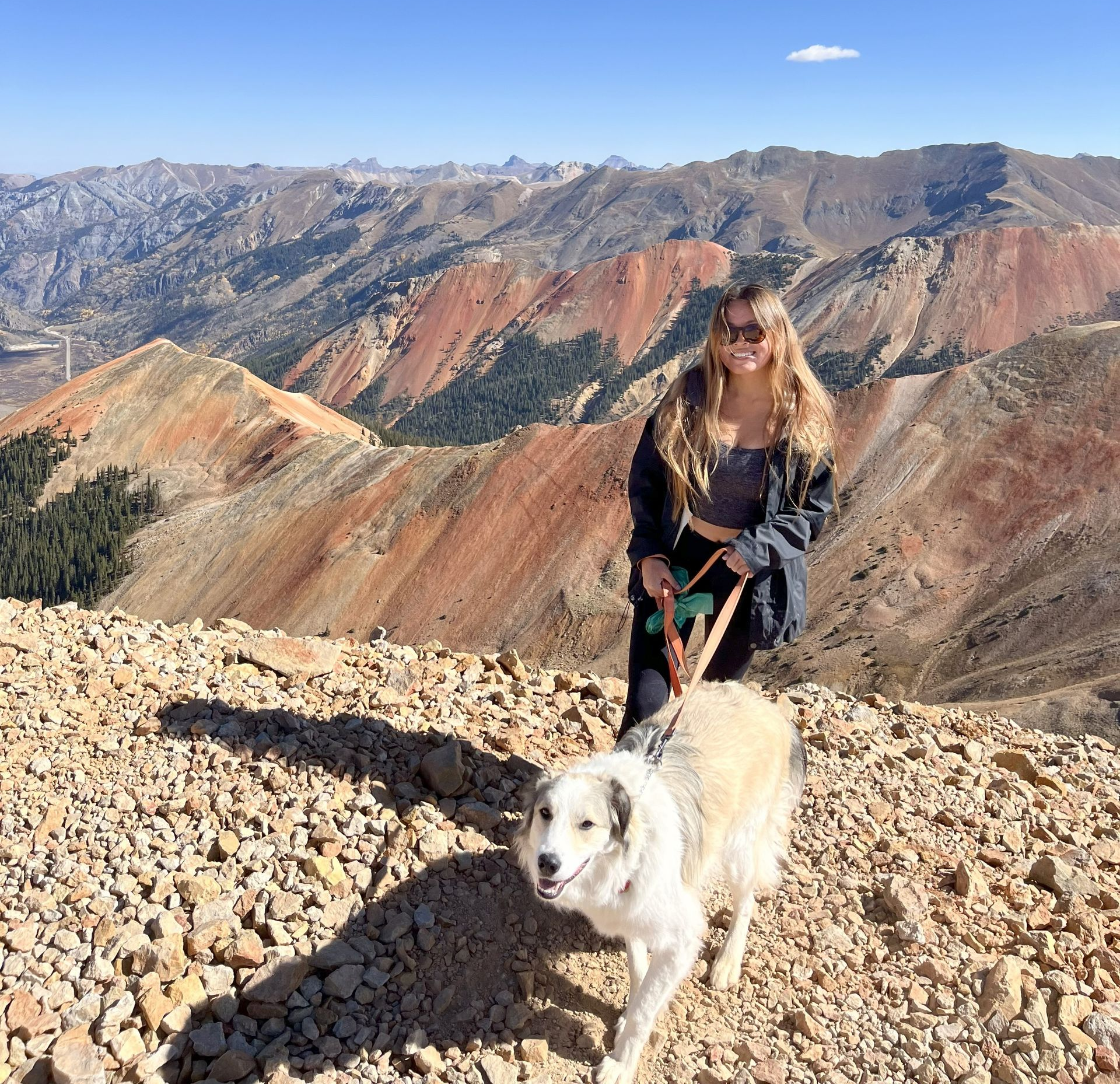
to accept a job and move to Grand Junction, Colorado, would have everlasting and profound positive effects on the way I see myself and the world. To have a chance at happiness in Colorado, I decided to say yes to everything. Mountain biking, climbing, skiing, hiking, camping, you name it. 


I also decided to make friends with anyone and everyone I had a connection with. My first Asian friend was someone I met in my first week in Grand Junction. She’s still one of my closest friends today, and funny enough, she’s in New York now getting her Master’s. 


My time so far in this beautiful Rocky Mountain state has been beautiful, messy, confusing, and peaceful, and it has made me discover and meet myself for what seems like the very first time. 


Who knew, I do enjoy camping and skiing, and large city crowds actually give me anxiety. Who knew, I felt the most comfortable in my skin for the first time, so I decided to change my hair back to black. 


My Colorado journey is not over yet, but so far, my time on the Western Slope has been transformative in the most budding and blossoming way.

We Want to Hear from You

We’re inviting community members across the state to share their own stories of living in Colorado—of identity, discovery, and what it means to belong. Tell us about a moment or a place in Colorado that changed how you see yourself or your community.

Share your reflections at ambassador64@rmpbs.org

This is part of Ambassador64, our statewide listening initiative to ensure public media reflects the voices of all 64 counties in Colorado—starting with yours.

Discover More Features

By Ashtonn Means April 1, 2026
Rocky Mountain Public Media , the home of Rocky Mountain PBS, KUVO Jazz, and TheDrop303 has a partnership with Colorado Ethnic Media Exchange to launch this monthly essay series, as part of our vision to co-create a Colorado where everyone feels seen and heard. These stories are sourced from community members across the state—told in their own words and selected from our 64-county community ambassador program. They are not editorial products of our journalism team, but are first-person reflections on life in Colorado - building bridges through empathy. Learn more about all of our brands and content at www.rmpbs.org/about .
By Gil Asakawa April 1, 2026
When people discover Boxtastic at Denver International Airport, they’re often drawn in by the bright displays, colorful characters, and the excitement of opening a “blind box.” Behind that experience is Michael Ye, quietly building and shaping the vision of Boxtastic alongside his wife, Mimi Luong Ye. While Mimi is often the face of the brand—connecting with the community, sharing stories, and bringing energy to events—Michael is the one carefully crafting what Boxtastic is becoming. In 2024, he noticed a growing trend while running their family gift shop, Truong An Gifts, in Denver. Labubu dolls made by Pop Mart, a Beijing-based toy company, had become an explosive fad. Pop Mart sells the line of various Labubus in a “collect them all” ethos of blind boxes, in which the exact item inside is a surprise until it’s open. Then consumers keep buying them to collect the other ones. Labubus became Pop Mart’s biggest worldwide hit. After Truong An’s Labubu popularity and long lines waiting outside their gift shop door caught the attention of Denver International Airport, the Ye’s came up with Boxtastic, which was more open-ended and not tied to just the Labubu fad. Like a spinoff for a hit television show, Boxtastic, is inspired by the blind boxes that generate repeat purchases.  “It’s kind of become the thing that I love,” Ye says of the Truong An-inspired world of retail. “And Boxtastic is just a version of that. It’s a spin-off.”
By Dr. Esther Park April 1, 2026
For Dr. Esther Park, the path to becoming a psychologist wasn’t linear—it was deeply personal. Like many children of immigrants, she grew up with a clear expectation: become a doctor or a lawyer. “For a while, I believed I would be a pediatrician,” she recalls. “But on the first day of organic chemistry in college, I quickly realized medical school wasn’t for me.” What followed was a quiet but powerful shift. Park gravitated toward psychology, initially without a clear end goal. “Looking back, I can see that I was drawn to it for deeply personal reasons,” she says. “There was something I wanted to understand about myself, my upbringing, and the dynamics that shaped me.” That curiosity eventually led her to earn a doctorate in clinical psychology and continue her training at the Denver Institute for Psychoanalysis. Dr. Park describes her identity as a 1.5 generation Korean American as central to her work. “I understand, intimately, what it feels like to belong and to feel ‘other’—sometimes in the very same moment,” she explains. Holding both Western and Korean values has created what she calls a “dual identity,” shaped by autonomy and self-definition on one hand, and sacrifice, duty, and collective identity on the other. This duality brings both gratitude and grief. “I carry gratitude for the immense sacrifices my parents made… But I also carry a lot of grief. The grief of recognizing that my freedom is, in many ways, built on their limitation.” These layered emotions inform how she approaches her patients—with nuance, curiosity, and compassion. “I don’t see mental health symptoms in isolation. I see them within cultural systems, generational trauma, and the psychological weight of belonging.” Dr. Park emphasizes that many mental health challenges—like anxiety, depression, and perfectionism—are often rooted in intergenerational experiences. “We do not start from scratch,”she says. “We are shaped not only by our own experiences, but by the emotional histories of the generations before us.” In immigrant families, survival stories often translate into internal pressures: achieve, don’t fail, make it worth it. “These messages are often rooted in love,” she adds, “and yet, they can become internal pressures that shape identity in profound ways.” Starting her own private practice was another intentional step in reclaiming autonomy. “I wanted the freedom to build a practice that reflected my values,” Park says. “My parents immigrated to this country without the luxury of time…Because of that, I’ve come to see time as one of the most valuable forms of wealth.” Her work, grounded in psychodynamic and psychoanalytic therapy, goes beyond symptom relief. It invites deeper self-exploration and lasting change. “Many of the individuals I work with are interested in understanding themselves at a deeper level—not only to improve their own lives, but to change patterns that may have existed across generations.” It gives Dr. Park hope that “more individuals are beginning to ask deeper questions about themselves—not just what they feel, but why.” She hopes more people can see self-understanding not as a weakness, but as courage.