A generation of women judges represent Colorado’s AANHPI community

Gil Asakawa • April 1, 2026

Once upon a time, Denver was not known as a hotbed of AANHPI attorneys. The post-WWII influx of Asian immigrant communities (especially the growth of the Japanese American population) led to just a smattering of Asian American attorneys. 


Minoru Yasui, one of the four Japanese Americans who argued against the wartime incarceration of JAs, was an attorney and settled in Denver after the war, serving the JA community, sometimes in trade for chickens. He was the City of Denver’s first head of what’s now named Agency for Human Rights & Community Partnerships, and Yasui was a legendary (if salty-tongued) leader in civil rights and social justice who is known to have prevented race riots in the wake of the assassination of Martin Luther King Jr., because of the relationships he had built with the African American community. 


A few other Asian American attorneys put out their shingles in the decades since the civil rights era, and in the 1980s, the Colorado chapter of the Asian Pacific American Bar Association (CAPABA) was formed. In 1977, Mariko Tatsumoto, an author who now lives in Pagosa Springs in southwest Colorado, was the first Asian woman attorney in Colorado, after receiving her law degree from CU and settling in Denver. 


And with the growth of the area’s Asian communities it was inevitable that AANHPIs would eventually rise to sit on the bench as judges in the area’s many courts. Min Yasui was never a judge, but Mel Okamoto, another Japanese American, now retired, was appointed a judge in the 1990s. 


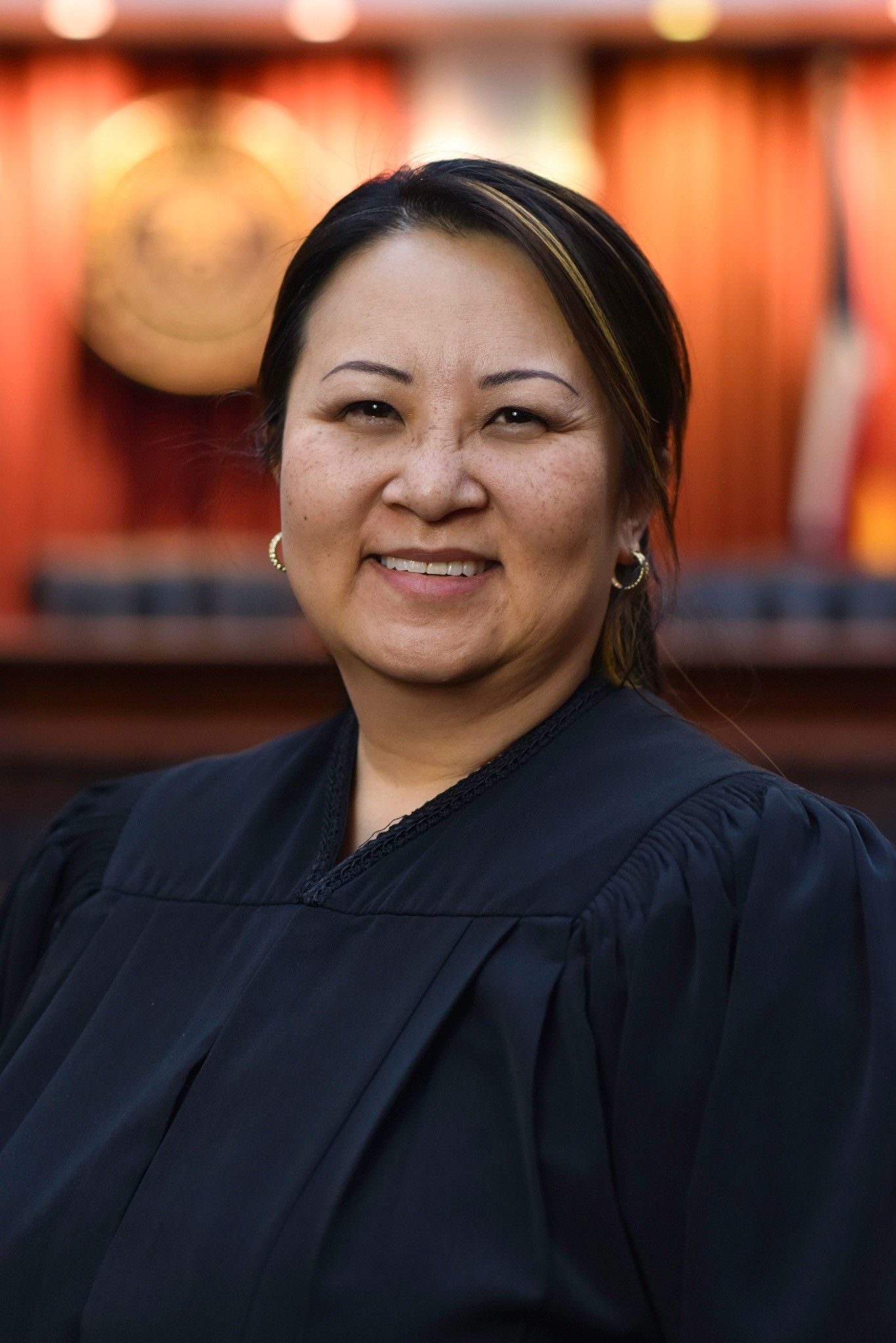
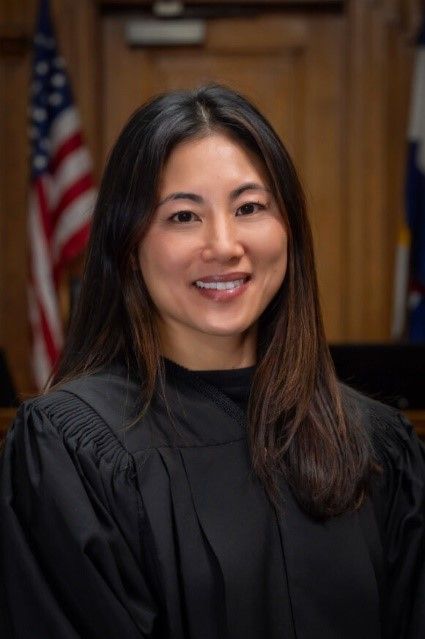
Most notably, the first female Asian American judge appointed in Colorado is Chelsea Malone, who serves on Denver County Court. 


“I wasn’t even 100% sure of that statistic when I was applying,” Malone says. “I was trying to do research and I couldn’t find any Asian female judges. And even after I got the appointment, I wasn’t 100% sure, because you never know until I got a letter from an organization in Denver that said ‘congratulations on being the first Asian female judge in Colorado.’ And I was like, wow.” 


That almost makes Colorado seem... well, backwards.


But we’re catching up. The state’s APABA organization doesn’t list the number of its members, but a list provided by a Colorado APABA member of the state’s Asian American judges as of last year included almost 20 AANHPI jurists, and out of those, 14 are women. 


Chelsea Malone is no longer alone.


Cindy Dang is one of the women who is a colleague of Malone on the bench. Dang has been, since 2022, a senior judge for Denver County Court, which means she’s mostly based in the Lindsay Flanagan courthouse, covering for other judges. The courthouse is on West Colfax, just a couple blocks from the Denver jail.


Before arriving in Denver County Court, Dang was a judge for Adams County Courts from 2016 to 2022, and from 2013 to 2016 she was a district court magistrate for the 17th Judicial District, which includes Adams County and the City and County. There are many judges, serving in a multitude of courts. “Yes, and I’m still learning about different judicial positions, even though I’ve been a judge for over twelve years,” she admits.


Dang, who is Vietnamese American, attended law school at the California Western School of Law in San Diego and came to Colorado in 1997 for an internship at the DA office in the fourth Judicial District in Colorado Springs. When she decided to start her own business, Dang says, “I decided to open my private practice in Denver because there’s a much larger Vietnamese community.”


She opened her office near the Little Saigon business district. Her goal was to work with the community of her heritage. “I speak Vietnamese fluently, so it’s easier for me to communicate with Vietnamese clients, although I ended up practicing immigration law and I had clients from all over the world,” she says. 


But after practicing for 12 years as a private attorney, she was urged by the Colorado Women’s Bar Association to become a magistrate. “I wanted to be a judge in order to further my life mission of helping others pursue their American dream,” Dang explains. 


“I always had the desire to help in that way, and that’s why I loved being a lawyer. And then being a judge just furthered that for me, because I would be in the position to ensure that all of the litigants, all of the parties, had access to justice and have their day in court, would be treated fairly in court. For me, it just furthered my life mission. Yeah, that’s why I really enjoy it.”


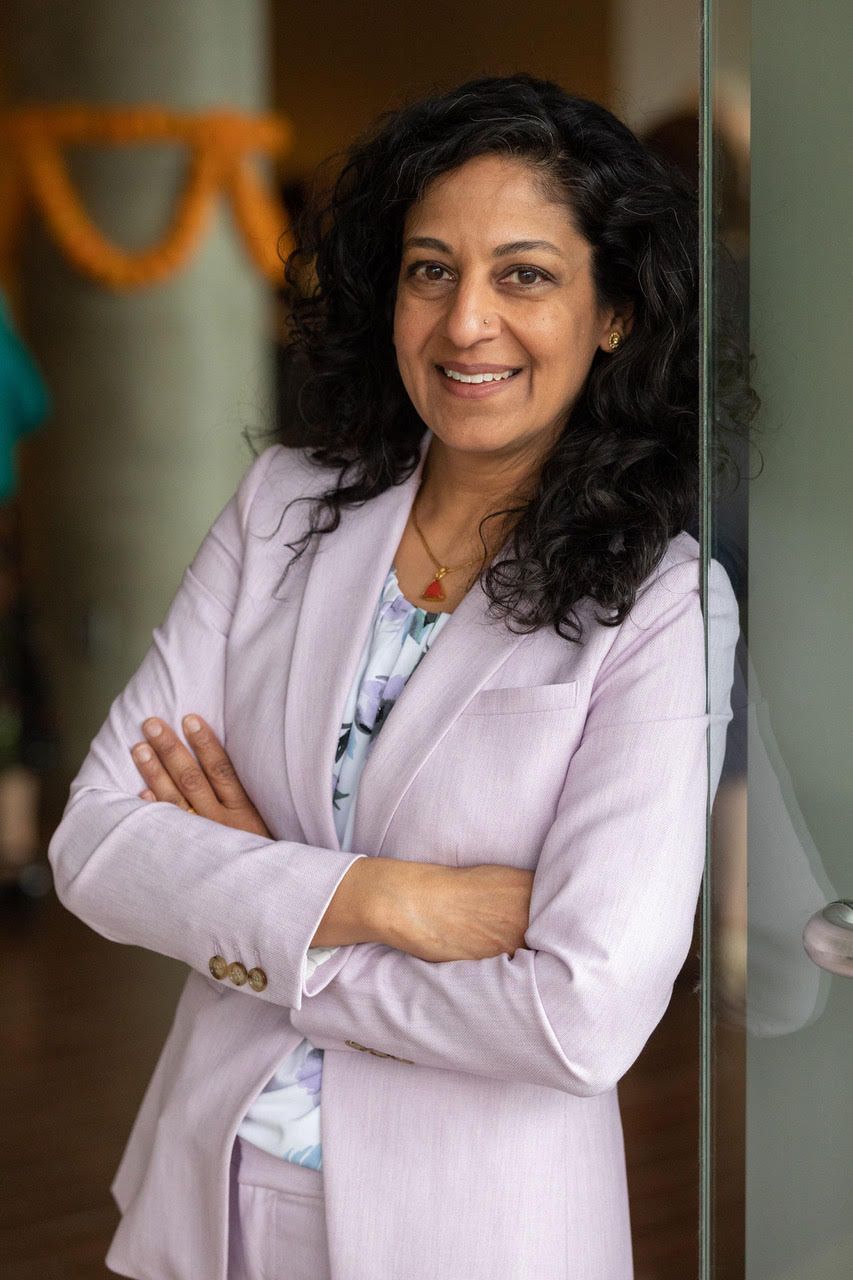
Neeti Pawar, a South Asian judge, enjoys her work too. She’s been a judge for seven years. But she also has an identity outside of court that keeps her centered and focused on not just justice, but also on culture.


Like other judges, she was an attorney and public defender -- and she never actually thought of a future as a judge. “It was not something I aspired to, because I never perceived it as something that was available for me,” she recalls. “Those are not the things that people like me do.”


Her ethnicity was one reason. “South Asians were not allowed in the country until the 1965 Immigration Act, which, yeah, which nullified the Chinese Exclusion Act, which excluded Indians as well.” It’s true, the Chinese Exclusion Act of 1882 was used to keep out immigration from across Asia, including the “Hindus” as they were called, from India. The 1965 Immigration Act abolished strict quotas and opened immigration from Asia for doctors, engineers, scientists, students… and eventually lawyers. 


Pawar’s family came to Carthage, Illinois, where her father was a doctor.


Neeti, who’s now 56, chose the path of law, and settled in Denver. She started the local chapter of the South Asian Bar Association in 2009. SABA even held its annual North American convention in Colorado in 2025 for the first time, with around 500 attendees. (Coincidentally, national APABA also held its convention in Denver in 2025.)


She became a trial attorney for people who need help the most, representing clients and consulting as a problem-solver when a judge position came open on the Colorado Court of Appeals in 2019.


It’s been the right choice. “I’m enjoying it. In seven years there has been a tremendous learning curve, growth and now a place of like, not comfort, like complacency, but comfort, like appreciating when the difficulties are because it’s a difficult job, as opposed to, it’s difficult because I don’t have any footing.”


And one way she has found her footing is as a dancer in Mudra Dance Studio, a South Asian dance troupe that has been the heart and soul of the Colorado Dragon Boat Festival and other cultural celebrations.


What began as a simple drop-off turned into something more.


“I was dropping my niece at an Indian dance workshop, and they asked, ‘Where are you going?’” she recalls. “I said, ‘I’m just dropping her off—I have to go to work.’ And they said, ‘No, you have to stay.’”


She stayed—and got hooked.


“So here, 15 years later, I’m part of a company, teaching, performing, you name it,” she says with a laugh. People ask her how she has time for dance, but it really is the dancing that has given her the “bandwidth and the balance” continue doing her job.


“On Sundays, when I’m at the studio, it really allows my left brain, the processing, thinking part of the brain, to just turn off and defragment, because I’m so focused on dance. And then when I go back, that part is refreshed and I can dial in. So it keeps me connected to culture, to community, to myself.” 

"It’s really important to have a diverse judiciary, not just how we look, but where we come from."

Back to Colorado’s first woman Asian American judge: Chelsea Malone has an entirely different life journey and experience as an Asian American. 


She was born in Seoul, South Korea in 1977, and adopted when she was just three months old. “My mom was a nurse in the army, and she was stationed in Seoul, and she said at the time, there was a lot of push for the military folks to adopt Korean and there were a lot of Koreans and orphanages. And so she was only 25 and she was single, and she just felt compelled to help out so, and it was apparently very easy, very little red tape, very little paperwork. So she just walked in, and I don’t know if the same day or the next day walked out with me,” Malone explains.


Her mother brought her back to the U.S. and moved to a Crow Indian reservation in Montana. Not South Asian Indian, but indigenous American Indian. Her mother wanted to work where healthcare was needed most. She eventually met and married a Crow, and they still live on the reservation. Malone is now married to an attorney in Denver and has two daughters who are nine and eleven, but she returns to the Crow reservation every summer for her community’s annual Crow Fair traditional cultural festival, where 1,000 teepees cover the landscape. 


Although she appreciates her upbringing on the reservation, Malone wanted to go to a city, and she knew as a student that she was interested in the legal profession. “My dad was really into Native American Rights and kind of the politics on the reservation. And he always thought that I could become a lawyer and then go back and fight for water rights and things like that. That would be an interesting thing to do.”


But she didn’t return to the reservation. She went to college in Wyoming on a music scholarship, then moved to Denver to live with her grandparents and attend DU’s Sturm College of Law. 


She worked in a big law firm at one point, but wasn’t happy. “When I went to work for the public defender’s office doing indigent defense, I was like, this is it. It really connected me to my roots and working with poor people and working with people from different cultures and languages and rooting for the underdog. And I loved criminal law, so then that’s what I ended up doing. I started off as a public defender.”


Like Pawar, she didn’t think of being a judge as a career goal. There were simply not many role models she could see. “There were no Asian female judges. So it just wasn’t something that seemed like a natural path that could happen for me.” But colleagues urged her to apply for the bench.


“It’s really important to have a diverse judiciary, not just how we look, but where we come from. And the reason that I wanted to be on the county court, and not the district court, is we have a lot of unrepresented people, and I think if you have a jurist who can’t relate to them, or you don’t understand where they’re coming from, you’re going to judge them in a different way. And so I think coming from a culturally rich but poverty stricken area where English isn’t everyone’s first language gives me a different perspective that I use every day in the courtroom.”


She wants to make sure the people who appear before her court fit in. Yet, that feeling of “fitting in” is elusive. She suffers from “imposter syndrome,” a familiar feeling for many people raised with immigrant or “foreign” cultures. She never learned Korean, and wasn’t raised with much Korean culture or even food. 


“My mom brought stuff back from Korea when we moved here, and she still has a friend from Korea who would visit us and make Korean food. My mom tried to keep me connected to the Korean culture. But it does feel a little like, I’m looking it up in an encyclopedia or Google trying to learn about it. So I think culturally, I identify much more as native. I’ll go to a powwow, like the Denver powwow, and I feel so happy.”


That sense of belonging shifts depending on the space she’s in. Around Asian communities, she feels a different kind of comfort—less about cultural familiarity and more about simply fitting in.


She accepts her dual cultural role, and she’s trying to raise her two daughters to balance their heritages too. “So it’s really a mind trip being adopted, to be ethnic and in an ethnic community, but not fit into that ethnic community.”


Despite the current divisive times, she is upbeat about the future of the Asian American judiciary.  


“I’ll tell you something that does make me feel inspired and hopeful. When I first started as an attorney in 2004 there was like one other Asian that I would see, and she was a prosecutor,” she said.


“When I would go into the courtroom, people just assumed I was an interpreter, and then when I took the bench, not infrequently, people would come into the courtroom and do a double take and say things like, ‘Oh, you weren’t what I was expecting.’ And that doesn’t happen anymore. Now we have Asian attorneys, and we have Asian judges, and so good things are changing.”

Discover More Features

By Ashtonn Means April 1, 2026
Rocky Mountain Public Media , the home of Rocky Mountain PBS, KUVO Jazz, and TheDrop303 has a partnership with Colorado Ethnic Media Exchange to launch this monthly essay series, as part of our vision to co-create a Colorado where everyone feels seen and heard. These stories are sourced from community members across the state—told in their own words and selected from our 64-county community ambassador program. They are not editorial products of our journalism team, but are first-person reflections on life in Colorado - building bridges through empathy. Learn more about all of our brands and content at www.rmpbs.org/about .
By Gil Asakawa April 1, 2026
When people discover Boxtastic at Denver International Airport, they’re often drawn in by the bright displays, colorful characters, and the excitement of opening a “blind box.” Behind that experience is Michael Ye, quietly building and shaping the vision of Boxtastic alongside his wife, Mimi Luong Ye. While Mimi is often the face of the brand—connecting with the community, sharing stories, and bringing energy to events—Michael is the one carefully crafting what Boxtastic is becoming. In 2024, he noticed a growing trend while running their family gift shop, Truong An Gifts, in Denver. Labubu dolls made by Pop Mart, a Beijing-based toy company, had become an explosive fad. Pop Mart sells the line of various Labubus in a “collect them all” ethos of blind boxes, in which the exact item inside is a surprise until it’s open. Then consumers keep buying them to collect the other ones. Labubus became Pop Mart’s biggest worldwide hit. After Truong An’s Labubu popularity and long lines waiting outside their gift shop door caught the attention of Denver International Airport, the Ye’s came up with Boxtastic, which was more open-ended and not tied to just the Labubu fad. Like a spinoff for a hit television show, Boxtastic, is inspired by the blind boxes that generate repeat purchases.  “It’s kind of become the thing that I love,” Ye says of the Truong An-inspired world of retail. “And Boxtastic is just a version of that. It’s a spin-off.”
By Dr. Esther Park April 1, 2026
For Dr. Esther Park, the path to becoming a psychologist wasn’t linear—it was deeply personal. Like many children of immigrants, she grew up with a clear expectation: become a doctor or a lawyer. “For a while, I believed I would be a pediatrician,” she recalls. “But on the first day of organic chemistry in college, I quickly realized medical school wasn’t for me.” What followed was a quiet but powerful shift. Park gravitated toward psychology, initially without a clear end goal. “Looking back, I can see that I was drawn to it for deeply personal reasons,” she says. “There was something I wanted to understand about myself, my upbringing, and the dynamics that shaped me.” That curiosity eventually led her to earn a doctorate in clinical psychology and continue her training at the Denver Institute for Psychoanalysis. Dr. Park describes her identity as a 1.5 generation Korean American as central to her work. “I understand, intimately, what it feels like to belong and to feel ‘other’—sometimes in the very same moment,” she explains. Holding both Western and Korean values has created what she calls a “dual identity,” shaped by autonomy and self-definition on one hand, and sacrifice, duty, and collective identity on the other. This duality brings both gratitude and grief. “I carry gratitude for the immense sacrifices my parents made… But I also carry a lot of grief. The grief of recognizing that my freedom is, in many ways, built on their limitation.” These layered emotions inform how she approaches her patients—with nuance, curiosity, and compassion. “I don’t see mental health symptoms in isolation. I see them within cultural systems, generational trauma, and the psychological weight of belonging.” Dr. Park emphasizes that many mental health challenges—like anxiety, depression, and perfectionism—are often rooted in intergenerational experiences. “We do not start from scratch,”she says. “We are shaped not only by our own experiences, but by the emotional histories of the generations before us.” In immigrant families, survival stories often translate into internal pressures: achieve, don’t fail, make it worth it. “These messages are often rooted in love,” she adds, “and yet, they can become internal pressures that shape identity in profound ways.” Starting her own private practice was another intentional step in reclaiming autonomy. “I wanted the freedom to build a practice that reflected my values,” Park says. “My parents immigrated to this country without the luxury of time…Because of that, I’ve come to see time as one of the most valuable forms of wealth.” Her work, grounded in psychodynamic and psychoanalytic therapy, goes beyond symptom relief. It invites deeper self-exploration and lasting change. “Many of the individuals I work with are interested in understanding themselves at a deeper level—not only to improve their own lives, but to change patterns that may have existed across generations.” It gives Dr. Park hope that “more individuals are beginning to ask deeper questions about themselves—not just what they feel, but why.” She hopes more people can see self-understanding not as a weakness, but as courage.