3456tea serves Korean drinks – and Korean culture for the Koreatown community

Kai Vong • April 1, 2026

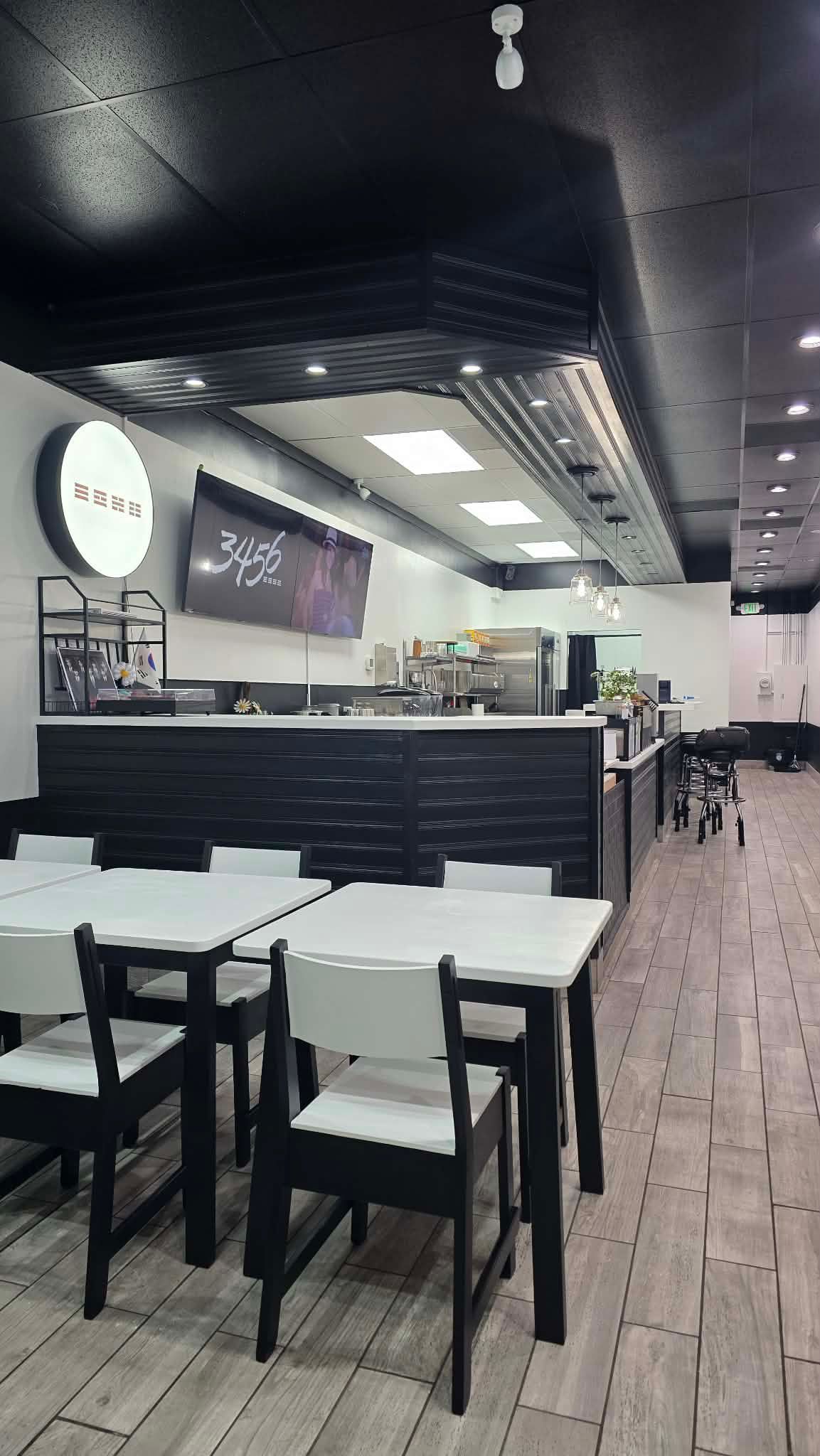
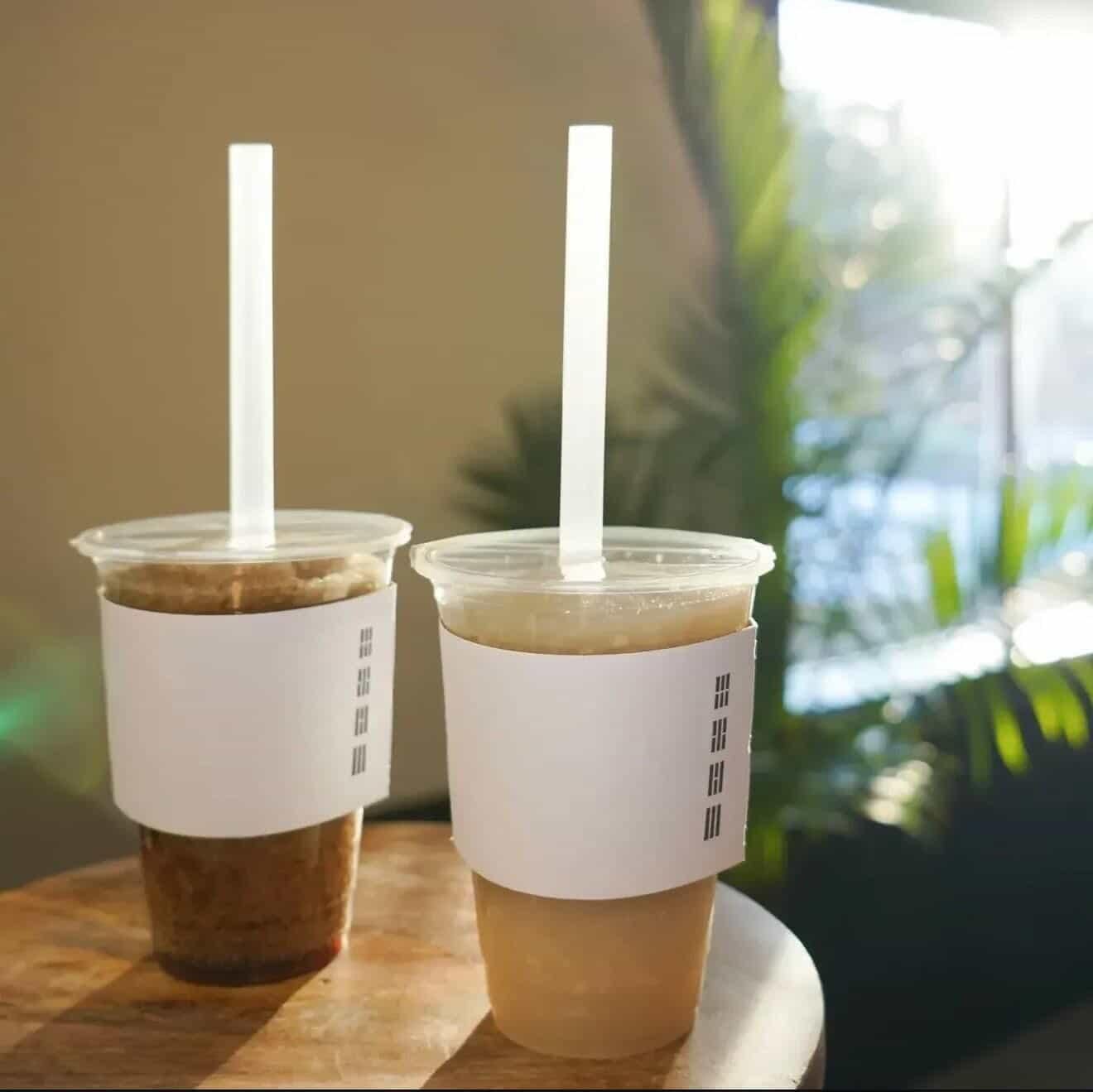
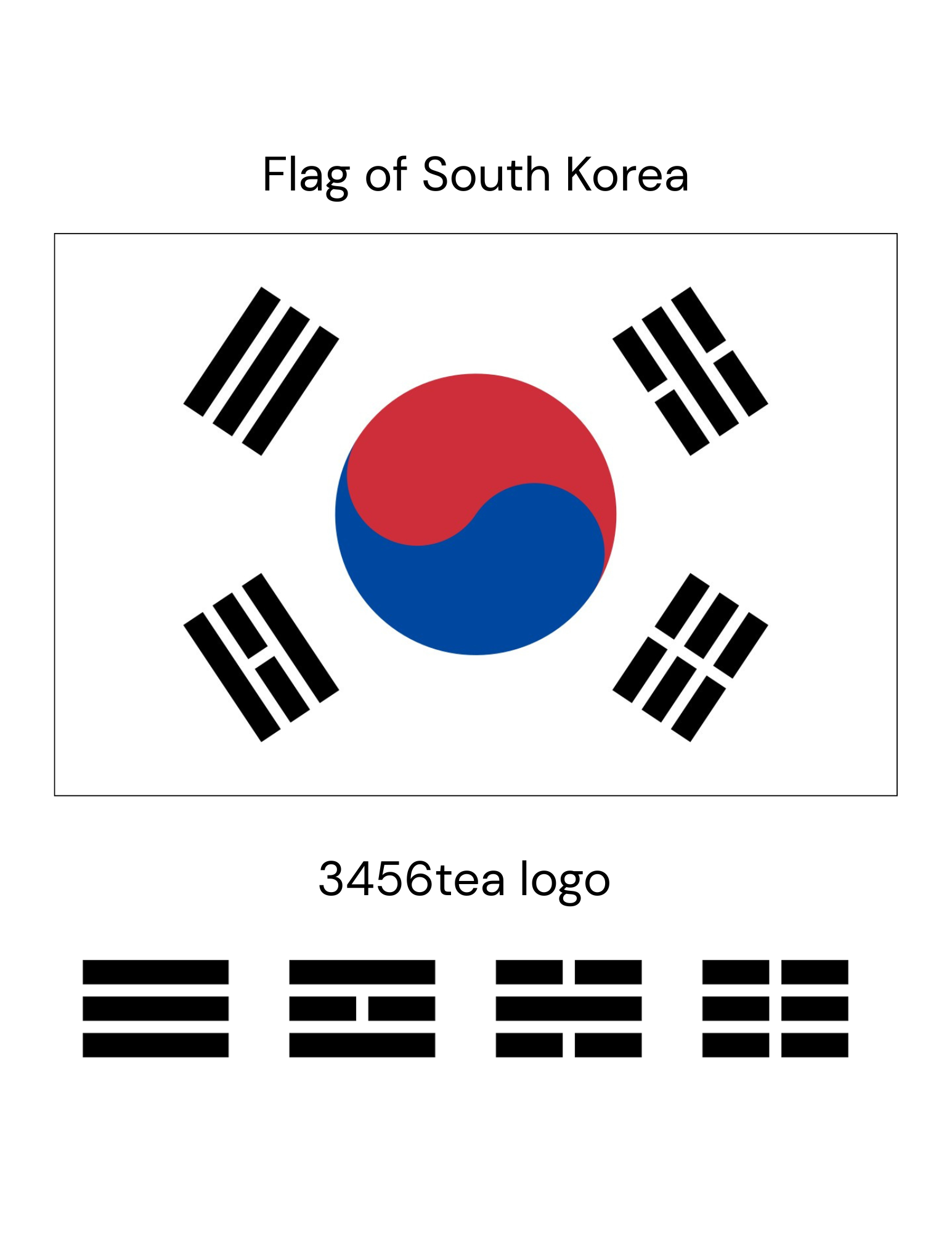
To understand the passion that owner Sean Choi of 3456tea has for the drinks he serves, first you have to understand the shop’s logo: four symbols of three horizontal black bars, with some broken into two pieces. The symbols represent three, four, five and six. To understand the logo, look at the flag of South Korea.


The same black bars, or trigrams, adorn the flag, surrounding a red and blue symbol that’s known to us in the West as “yin and yang” – representing opposites but also great duality, equality. It’s about accepting that opposing forces can be complementary, interconnected, and interdependent. The flag was designed in the 1880s during the Joseon Dynasty, but became the official flag of South Korea in 1949. The flag represents deeply historical Asian philosophy and tradition.


For Choi, who is 43, the trigrams represent multiple meanings like the four seasons, the sky, sun, moon and earth or the four points of the compass, and virtue, righteous, wisdom and morals. He chose the name 3456tea to bring in “unification to our community and allowing good and righteous morals to be fed into the current crazy world.” And his shop does this by serving traditional Korean beverages and desserts.


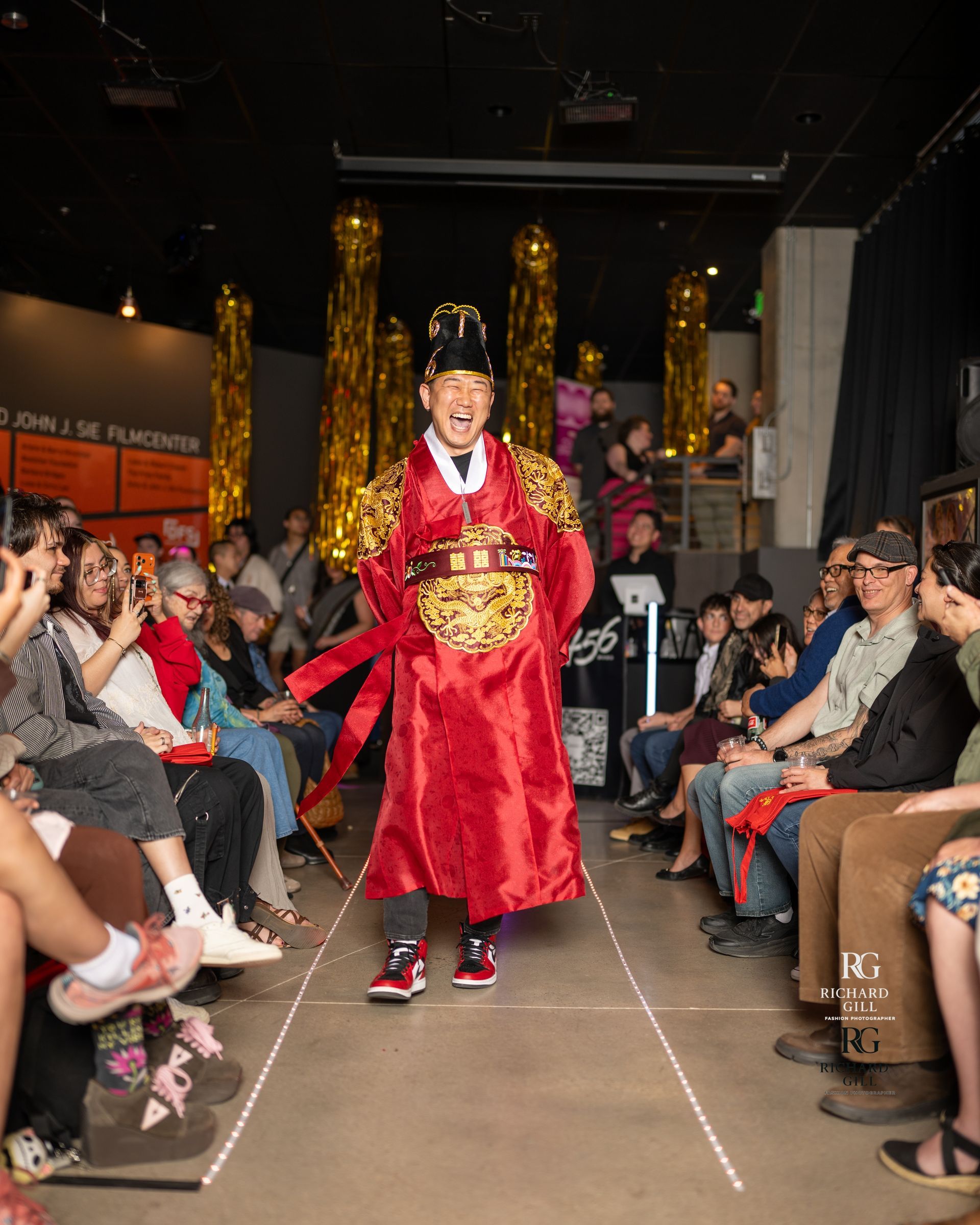
Choi has the symbols on his store merchandise like hats and t-shirts, and even has the four tattooed on his arm. He is more than proud of his Korean heritage: he’s passionate about it.


To share his passion with a growing base, he recently moved 3456tea from the Coark Korean food hall to the heart of Koreatown off Havana Street near HMart.


He dreamed of bringing his drinks closer to the community, but it took time to find a location. When a boba shop closed, Korean community leaders recommended him for the location. “I was trying to see what the options were, and then, community leaders around here were saying we need to be in this perfect spot.”


His goal is to bring his community-based, “collaborative vibe into this plaza.” In the new location, he plans to continue hosting community events like the popular K-pop parties that bring in families.


Choi and others on his staff are experienced DJs so customers can expect more than just drinks and desserts when they come in the door, or in the parking lot as summer arrives.


“We do a lot of community events,” Choi says proudly. “Smaller scale would be hosting K-pop themed events, which we can do a lot of those here. We have also participated in night markets, Aurora Global Fest, Dragon Boat Festival, the Dragon Boat Film Festival, all the programs that go on at the Social Fabric Hub. That’s our people, so we help out with stage music, emcee and participate as a vendor.”


People would ask him why he spent so much time organizing community events for free. “But honestly, I enjoy it. I love seeing people come together and have a good time at these events,” he said.

He believes his connection to community is shaped by his upbringing. Born in Korea, he moved to the U.S. as a child—first to Arizona, then to Colorado at 13—attending several high schools across the Denver area. “Having that background of growing up and moving every year influenced me to get to know communities. I had to learn how to communicate better as a new person, getting to know each new community.”


His people skills led him into studying design and then working in marketing for the tech industry, which had him traveling constantly. During his journeys, he discovered that no city had a place that served the fruity tea drinks he remembered from his childhood in Korea.


“I couldn’t find a Korean drink shop, and I always like to make tea. So I was looking for that, but I couldn’t find any. In New York, there’s a very sit-down and authentic type of traditional hot tea drinking, and there are similar ones in Chicago and LA, but not something like this quick pick up, like a boba type of concept.”


He started planning a Korean drink space, and trained by working for restaurants after his day job. He is careful to note that although boba drinks are now iconic Asian treats, his drinks do not include boba.


His drinks are made with traditional teas and Korean ingredients such as Wolfberry (goji berries) and familiar plants like plums, yuzu citrus, Asian pear, ginger and coix (roasted jobs tears, a type of grain). He also serves the most well known traditional drinks: a rice drink (Shik-hye) and a cinnamon drink (Soo-jung-gwa).


He knows he has to educate people about the drinks he offers. “We have a whole pitch, but we’re not just selling a drink we are selling a cultural experience. And our drinks are a little bit healthier and made with real fruits.”


3456tea will also serve Korean desserts including one like a pancake pastry. “It’s one of the most traditional desserts of Korea. So that’s the concept we’re trying to push, and making it kind of like crepes.”


Choi is determined to connect people to Korea through his passion. “I want to be the bridge. I want to be the bridge because, like, the people who want to go to Korea and, you know, visit, they need a little bit of training before they go. So get familiar with the community and culture, and then you can really explore it over there.”


And for newcomers from Korea, he adds, “We could be that community that helps connect the people, because that’s important. That’s the role that we want to play, whether it’s food, music, or just like, hey, where do I go to get my license?”


And, he knows one of the most effective ways to bridge those two worlds is through pop culture. So 3456tea has two menu items that will attract old and young, curious and obsessed fans… of Kpop Demon Hunters. He has created Huntrix and Saja Boys drinks that blend sweet fruity bases with natural hues that he mixes on the counter for people to see that they transform colors. And they taste pretty great. 

3456tea

3456tea.com

Instagram: @3456tea

Discover More Features

By Ashtonn Means April 1, 2026
Rocky Mountain Public Media , the home of Rocky Mountain PBS, KUVO Jazz, and TheDrop303 has a partnership with Colorado Ethnic Media Exchange to launch this monthly essay series, as part of our vision to co-create a Colorado where everyone feels seen and heard. These stories are sourced from community members across the state—told in their own words and selected from our 64-county community ambassador program. They are not editorial products of our journalism team, but are first-person reflections on life in Colorado - building bridges through empathy. Learn more about all of our brands and content at www.rmpbs.org/about .
By Gil Asakawa April 1, 2026
When people discover Boxtastic at Denver International Airport, they’re often drawn in by the bright displays, colorful characters, and the excitement of opening a “blind box.” Behind that experience is Michael Ye, quietly building and shaping the vision of Boxtastic alongside his wife, Mimi Luong Ye. While Mimi is often the face of the brand—connecting with the community, sharing stories, and bringing energy to events—Michael is the one carefully crafting what Boxtastic is becoming. In 2024, he noticed a growing trend while running their family gift shop, Truong An Gifts, in Denver. Labubu dolls made by Pop Mart, a Beijing-based toy company, had become an explosive fad. Pop Mart sells the line of various Labubus in a “collect them all” ethos of blind boxes, in which the exact item inside is a surprise until it’s open. Then consumers keep buying them to collect the other ones. Labubus became Pop Mart’s biggest worldwide hit. After Truong An’s Labubu popularity and long lines waiting outside their gift shop door caught the attention of Denver International Airport, the Ye’s came up with Boxtastic, which was more open-ended and not tied to just the Labubu fad. Like a spinoff for a hit television show, Boxtastic, is inspired by the blind boxes that generate repeat purchases.  “It’s kind of become the thing that I love,” Ye says of the Truong An-inspired world of retail. “And Boxtastic is just a version of that. It’s a spin-off.”
By Dr. Esther Park April 1, 2026
For Dr. Esther Park, the path to becoming a psychologist wasn’t linear—it was deeply personal. Like many children of immigrants, she grew up with a clear expectation: become a doctor or a lawyer. “For a while, I believed I would be a pediatrician,” she recalls. “But on the first day of organic chemistry in college, I quickly realized medical school wasn’t for me.” What followed was a quiet but powerful shift. Park gravitated toward psychology, initially without a clear end goal. “Looking back, I can see that I was drawn to it for deeply personal reasons,” she says. “There was something I wanted to understand about myself, my upbringing, and the dynamics that shaped me.” That curiosity eventually led her to earn a doctorate in clinical psychology and continue her training at the Denver Institute for Psychoanalysis. Dr. Park describes her identity as a 1.5 generation Korean American as central to her work. “I understand, intimately, what it feels like to belong and to feel ‘other’—sometimes in the very same moment,” she explains. Holding both Western and Korean values has created what she calls a “dual identity,” shaped by autonomy and self-definition on one hand, and sacrifice, duty, and collective identity on the other. This duality brings both gratitude and grief. “I carry gratitude for the immense sacrifices my parents made… But I also carry a lot of grief. The grief of recognizing that my freedom is, in many ways, built on their limitation.” These layered emotions inform how she approaches her patients—with nuance, curiosity, and compassion. “I don’t see mental health symptoms in isolation. I see them within cultural systems, generational trauma, and the psychological weight of belonging.” Dr. Park emphasizes that many mental health challenges—like anxiety, depression, and perfectionism—are often rooted in intergenerational experiences. “We do not start from scratch,”she says. “We are shaped not only by our own experiences, but by the emotional histories of the generations before us.” In immigrant families, survival stories often translate into internal pressures: achieve, don’t fail, make it worth it. “These messages are often rooted in love,” she adds, “and yet, they can become internal pressures that shape identity in profound ways.” Starting her own private practice was another intentional step in reclaiming autonomy. “I wanted the freedom to build a practice that reflected my values,” Park says. “My parents immigrated to this country without the luxury of time…Because of that, I’ve come to see time as one of the most valuable forms of wealth.” Her work, grounded in psychodynamic and psychoanalytic therapy, goes beyond symptom relief. It invites deeper self-exploration and lasting change. “Many of the individuals I work with are interested in understanding themselves at a deeper level—not only to improve their own lives, but to change patterns that may have existed across generations.” It gives Dr. Park hope that “more individuals are beginning to ask deeper questions about themselves—not just what they feel, but why.” She hopes more people can see self-understanding not as a weakness, but as courage.