
5 Things to Know about Asian Americans and Mental Health
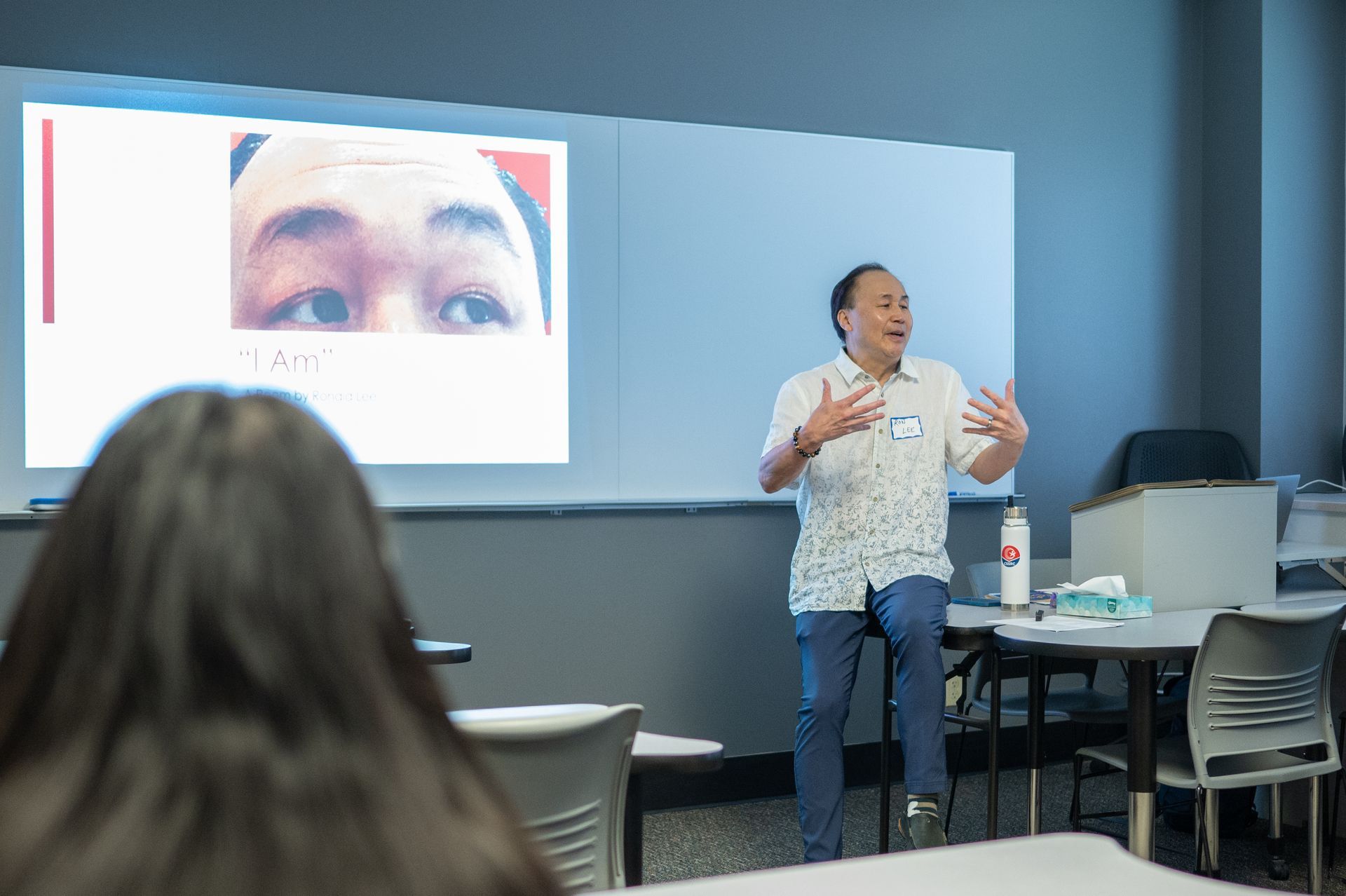
Dr. Ronald Lee, Psychologist • July 1, 2025

“Our brains so hate the idea of losing something that’s valuable to us that we abandon all rational thought, and we make some really poor decisions. So, Curtis wasn’t playing to win. He was playing not to lose,” said Rachel Chu, the protagonist in the movie Crazy Rich Asians.


The state of mental health for Asian Americans is a fluid, complex issue with its own unique risk factors, cultural influences, and protective elements. This article outlines five major themes that capture the ethnic and cultural perspectives that many Asian Americans are grappling with today in terms of their collective mental health struggles and multi-cultural needs.

1) Asian Americans Are Not a Monolith

Asian Americans are one of the most diverse racial groups in the U.S., differing significantly by income, education, language, and household structure. According to Pew Research, more than 20 Asian origin groups are represented in the U.S. 


The six largest groups are Chinese, Indian, Filipino, Vietnamese, Korean, and Japanese. Many consider Asian Americans the fastest-growing racial group in the country. 

Between 2000 and 2019, 11 Asian origin groups more than doubled in size, with smaller groups such as Bhutanese, Nepalese, and Burmese experiencing the fastest growth—some increasing tenfold.


The median age of Asian Americans varies widely: Hmong, Burmese, and Nepalese communities are among the youngest, while Thai and Japanese communities are among the oldest. Japanese Americans are the most likely to identify as multiracial, with one-third identifying as such.


Disparities also exist in education and income. For example, Malaysians, Mongolians, and Sri Lankans are among the most likely to have a bachelor’s degree, while Laotians and Bhutanese are among the least. 


Only two origin groups—Indian and Filipino Americans—had median incomes above the overall Asian American median in 2019, which was $85,800. Burmese and Nepalese Americans had the lowest median incomes of only $44,000 and $55,000, respectively.


About 24% of Asian Americans live in multigenerational households—compared to 13% of white Americans. More than half of Bhutanese Americans and large percentages of Cambodians and Laotians live in such households.


Implications: The “model minority” myth can lead to false assumptions that all Asian Americans are well-off, highly educated, and doing just fine. This obscures the diversity and disparities within the community. 


For example, multigenerational living, which is more common among Asian Americans, had implications during the COVID-19 pandemic when older adults faced higher risks of severe illness and death. We must take time to understand the nuances among Asian Americans and avoid assumptions based on stereotypes.

2) Anti-Asian Hate Did Not End After the Pandemic

Anti-Asian hate crimes surged during the COVID-19 pandemic, but the fear and racism did not disappear with the end of the pandemic. 


The 2023 Stop AAPI Hate report found that nearly half (49%) of AAPI respondents experienced a hate incident that year due to their race, ethnicity, or nationality. 

Over half (51%) encountered discrimination, and 53% were targeted for an additional identity (e.g., gender, age, class).


Despite the prevalence of hate, underreporting remains a major issue. Forty-four percent did not tell anyone about their experience—not even family or friends. 


Only 10% reported incidents to law enforcement, and just 6% to a civil rights agency. Among those affected, 43% reported negative health impacts, but 37% received no support at all.


Implications: It is a myth that hate crimes against Asian Americans stopped after 2021. Incidents of violence, discrimination, and verbal abuse persist in public spaces, workplaces, and schools. 


Many Asian Americans are hesitant to seek support from law enforcement or health professionals due to mistrust and a lack of cultural competency. This reinforces a cycle of fear, silence, and unaddressed trauma.

3) Asian Americans are Three Times Less Likely Than Others to Go to Therapy

Even before COVID-19, Asian Americans reported psychological distress at rates similar to other racial groups. During the pandemic, rates of anxiety and depression increased sharply, with a 97% spike in anxiety diagnoses in 2020 alone. 


Yet despite this, Asian Americans remain three times less likely to seek therapy. One study found only 8.7% accessed mental health services, compared to 17.9% of the general population.


Barriers include stigma, mistrust of healthcare, culturally based shame, lack of awareness, and challenges related to acculturation. Many Asian families consider mental illness a sign of weakness, and emotional struggles are often minimized or ignored. Asian Americans are also more likely to delay seeking professional help until symptoms become severe.


Cultural beliefs further complicate access. The mind-body connection emphasized in many Asian traditions may lead individuals to consult a physician instead of a therapist for mental health issues. Additionally, implicit biases in the healthcare system can lead to underdiagnosis or neglect.


Implications: The stigma surrounding mental health is deeply rooted in traditional Asian cultures. Mental health professionals must build trust, respect cultural values, and move at a pace that honors the client’s background and emotional readiness. 

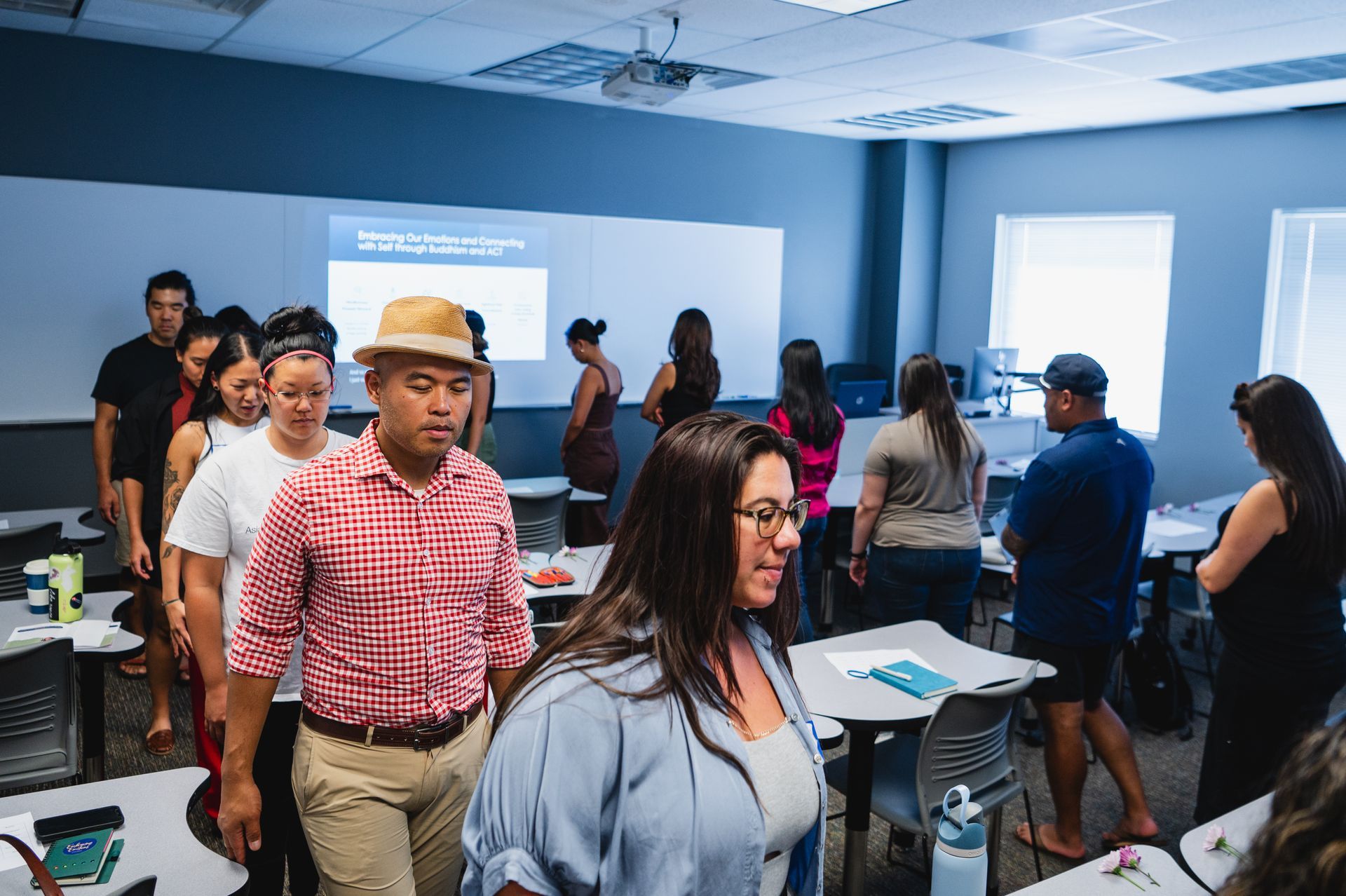
People walking in a classroom, some looking at a projector screen. Neutral expressions, bright room.

4) Suicide Rates Among Asian Americans are Rising

Family dynamics, particularly the tension between acculturation and enculturation, often play a central role in treatment. Addressing both the “success” narrative of the acculturated and the guilt of those clinging to cultural roots is key to effective care.


Recent studies have raised alarms about rising suicide rates among Asian Americans—especially youth, young adults, and elders. From 1999 to 2021, suicide rates for Asian American youth rose 72% for males and 125% for females. Suicide is now the leading cause of death among Asian American young adults.


Experts link these increases to cyberbullying, academic pressure, discrimination, and the persistent model minority myth. The stereotype that Asian Americans are naturally high-achieving can contribute to feelings of isolation, inadequacy, and invisibility—especially when individuals fall short of these expectations.


Access to firearms, which has increased in some Asian American communities, is also linked to rising suicide rates.


Implications: Suicide prevention must be part of the mental health conversation in Asian American communities. Talking about suicide does not increase risk—it reduces it. We need broad, culturally tailored education on warning signs, increased access to services, and supportive interventions across schools, workplaces, and community centers. Outreach to faith leaders and political advocates can also help build culturally relevant suicide prevention efforts.

5) Embracing Culture and History Builds Resilience

Despite the challenges, Asian Americans have a long legacy of resilience, strength, and healing. Families and communities that share stories of struggle and survival—such as Japanese American internment during WWII or recent recovery efforts in Maui—foster validation and connection.


Protective factors for AAPI mental health include strong ethnic identity, cultural pride, family bonds, and support from traditional healers. When combined with effective mental health care and a sense of community belonging, these factors significantly reduce the risk of mental health challenges.


Implications: Resilience among Asian Americans is fueled by cultural identity and community. Culturally competent mental health care that honors heritage, community narratives, and generational healing can help individuals thrive. 

When Asian Americans are supported in embracing both their cultural roots and their current realities, they become powerful agents of well-being and change.

Summary

Asian Americans, Native Hawaiians, and Pacific Islanders are not only the survivors of past traumas and an arduous history. They are also a proud product of a triumphant legacy that has turned hardship into prosperity and our setbacks into hard lessons learned. 

The AAPI community has been able to rise above the implicit biases of a dominant culture that would prefer that we are pigeonholed into a monolith of a static and dormant stereotype. But we as the AAPI community is much too resilient, fluid, and adaptive to be passive and stay in one place. 


Our community is far too diverse, vibrant, and driven to be held down. The diverse nations that represent our community does not divide us. It feeds our creativity and ingenuity as we become stronger in our own coalitions. 


The prevalence of anti-Asian hate teaches us that our growing awakening and activism to bend our politics towards social justice will continue to be an essential part of our mental health narrative. 


Our underutilization of seeking mental health support will force the professional community to meet us where we are at, become more aware of our cultural beliefs, and examine their own short comings in terms of cultural competence and representation. 


Finally, the rise in deaths by suicide for AAPI individuals will be a distress call to mobilize our families and communities into greater awareness about the struggles of our own people – particularly our youth and elders – and the vital need to partner with the world of healthcare systems and professionals.


I own a purple shirt that proudly reads in gold letters: I AM MY ANCESTORS’ WILDEST DREAMS. 


It is through that audacity as Asian Americans, to boldly forge ahead without losing site of where we came from, that will give us strength, wisdom, and energy to define, create, and re-create the best version of our authentic selves.

Asian American, Native Hawaiian, Pacific Islander Mental Wellness Summit

The third annual summit, organized by CORE, Colorado Asian Culture and Education Network, Asian Vibes in Denver, and Aurora Asian Pacific Community Partnership, is coming this fall 2025. Learn more at coloradoasian.org.

People walking in a classroom, some looking at a projector screen. Neutral expressions, bright room.

Resources

Asian Americans and the ‘model minority’ stereotype (2023)

www.pewresearch.org/race-and-ethnicity/2023/11/30/asian-americans-and-the-model-minority-stereotype


Factors Associated with Mental Health Help-Seeking Among Asian Americans: A Systemic Review (2021)

https://link.springer.com/article/10.1007/s40615-021-01068-7?fromPaywallRec=false

Key facts about Asian origin groups in the U.S. (PEW Research) (2021)

https://www.pewresearch.org/short-reads/2021/04/29/key-facts-about-asian-origin-groups-in-the-u-s


Mental Health: An Examination of the Barriers to Effective Care Among Young AAPIs (2022)

https://journals.publishing.umich.edu/ujph/article/id/2317


Readout of The Department of Justice’s Efforts to Combat Hate Crimes Against Asian American and Pacific Island Communities (2021)

www.justice.gov/archives/opa/pr/readout-department-justice-s-efforts-combat-hate-crimes-against-asian-american-and-pacific


Recommendations for the Treatment of Asian-American/Pacific Islander Populations (2012)

https://www.apa.org/pi/oema/resources/ethnicity-health/asian-american/psychological-treatment#:~:text=Religion/spirituality%2C%20community%2C%20and,emphasis%20on%20family%20and%20unity.


Stop AAPI Hate Report (2024)

https://stopaapihate.org/wp-content/uploads/2024/09/24-SAH-NationalSurveyReport-F.pdf


Stop Anti-Asian Hate Data, Behavioral Harassment, Business Discrimination (2020-2025)

https://stopaapihate.org/explore-our-data


Suicide Rates Among Asian American and Pacific Islander Youths – A Cause for Alarm

https://jamanetwork.com/journals/jamanetworkopen/fullarticle/2821493


Towards Culturally Sensitive Care: Addressing Challenges in Asian and Asian American Mental Health Services. (2025)

https://doi.org/10.1007/s10591-024-09716-w

Discover More Features

By Mary Jeneverre Schultz January 1, 2026
The Asian Book Bazaar on December 11, 2025, wasn’t just a marketplace; it was a high-profile gathering of some of Colorado’s most influential AANHPI literary and culinary figures, hosted by Colorado Asian Culture and Education Network at the Social Fabric Hub. The event featured a diverse lineup of creators whose work spans from award-winning children’s literature to investigative journalism and historical cookbooks.
By Jadyn Nguyen January 1, 2026
What would it look like for Asian American children to feel confident as their authentic selves? Growing up between cultures often teaches them how to make themselves smaller rather than how to belong. This question is what Sophia Siong sought to better understand. Her story is about choosing wholeness in a world that so often asks Asian Americans to diminish themselves. Sophia Siong, is a recent graduate of Regis University, who is leading community research on how Hmong Americans find belonging. Just north of Denver in cities like Westminster and Thornton is where many Hmong American families reside.  According to the Pew Research Center, 360,000 people in the United States identified as Hmong in 2023. Hmong are often seen as an ‘ethnic minority,’ which gives more reason to speak about and share their culture proudly.
By Stacey Vanhoy January 1, 2026
For more than two decades, the Nathan Yip Foundation has carried forward a legacy rooted in compassion, vision, and the belief that where a child lives should never determine what they can become. So, each year the foundation hosts a Chinese New Year Gala to raise critical funds for rural education and recognize an outstanding member of the community. Nathan Yip was just 19 years old when his life was tragically cut short in a car accident. He was Linda and Jimmy Yip’s only child, remembered for his kindness, curiosity, and deep empathy for others. While traveling in rural China, Nathan saw educational inequity firsthand, telling his parents, “We can make a difference.” Jimmy and Linda Yip transformed grief into purpose. In 2002, they founded the Nathan Yip Foundation to honor Nathan’s dream and extend hope to children in underserved communities. While the foundation’s early work focused internationally, its mission soon expanded closer to home, where rural Colorado students faced many of the same systemic inequities. Over the past ten years, the Nathan Yip Foundation has become a trusted champion for rural education in Colorado, investing more than $1.4 million in locally driven initiatives. These investments have modernized science labs, expanded career and technical education, and strengthened arts and creative programs. Rural school districts across Colorado face compounding challenges: shrinking tax bases, declining enrollment, persistent teacher shortages, limited access to advanced coursework, and reduced mental health and student support services. These pressures stretch already-limited resources and force difficult tradeoffs, even as educators remain deeply committed to their students and communities. Beginning this year, the foundation is launching a multi-year grant model that will support 5–7 rural school districts in its first cohort. These sustained partnerships are designed to create deeper, more lasting impact that will empower teacher-led, district-supported teams to design innovative solutions aligned to local needs. The response has been extraordinary, with 46 rural school districts applying and requesting more than $3.4 million in funding. This level of demand underscores the depth of need across rural Colorado. That is why the 2026 Chinese New Year Gala is more important than ever. The gala will raise the funds needed to expand the foundation’s capacity.  This year’s gala will honor Dr. Larry Chan for his extraordinary service to the Nathan Yip Foundation as a founding board member, and his 40 plus years to the University of Colorado School of Medicine. Dr. Chan embodies the values of service, generosity, and leadership that define this work.