Paborito cooks up take-home Filipino BBQ to Denver’s dining scene
Gil Asakawa • December 1, 2025

The Denver restaurant scene has in the past included very few Filipino eateries for diners to seek out. The most reliable source for Filipino cuisine has been the annual Filipino-American Community of Colorado Philippine Festival in Edgewater, where the community center’s Lolas (grandmothers) have been cooking up lumpia, adobo, and other traditional fare. A few restaurants and food trucks have flown the Filipino flag over the years, and even today less than a handful of restaurants serve dishes from the Philippines. 


Among them is a business that isn’t a sit-down restaurant or even a food truck, but a terrific takeout ghost kitchen with some unique twists on the cuisine. Paborito, which means “favorite,” is run by Jayson Leaño and his wife Geraldine Gan, who opened Paborito - Filipino BBQ last year in a ghost kitchen building on Vallejo then moved to its current location at 707 Federal Boulevard this summer. 


The couple had previously run the Toast Box sandwich shop, but turned to the food they love – and grew up on – traditional Filipino flavors.


Though the kitchen is closed on Mondays and Tuesdays, Leaño was working on a recent Monday night, prepping rolled Lechon Pork Belly flavored with Filipino stuffing for Thanksgiving orders that will be picked up Thursday morning; after 3 p.m. the couple will close up for the holiday, and enjoy their own Thanksgiving feast. But instead of turkey or lechon, they’ll have a Peruvian chicken they’ll pick up from a neighbor at their last ghost kitchen location. They love to support other startup businesses like theirs, and cite their favorites at their current Federal location.

Logo for Paborito Filipino BBQ, featuring a stylized sunburst design and text on a red background.

Order Online at paboritobbq.square.site

TAKEOUT ONLY

WED TO SUN: 11am - 9pm

707 Federal Blvd. Denver, CO

“Right now we’re still, we’re slowly building it,” he says. But Paborito already has a loyal following of regular customers (hence the Thanksgiving orders). There are days when the duo are at work for up to 10 hours, and take up to 60 orders. The menu ranges from dishes that evoke his grandma’s cooking in the northern Philippines to dishes inspired by the popular Philippines fast-food chain Jollibee, which has become popular in parts of the U.S. (but none in Colorado).


“At Paborito, we focus on serving traditional Filipino food that feels like home, especially for our Filipino community here in Denver,” he said in an email exchange. “Our to-go restaurant stays true to those comforting, familiar flavors. At the same time, we make the cuisine more accessible to a broader audience by collaborating with local coffee shops like Moonflower and Coffee Sarap, where we offer Filipino-inspired breakfast burritos and other approachable items. It’s a fun way to introduce new people to Filipino flavors in a format they already love.”


Leaño was born in the Philippines, then went to live with his father in San Diego, where he attended culinary school.


He worked as a chef and moved to Colorado Springs, where he met Geraldine, who was also born in the Philippines. The couple’s entrepreneurial streak led them to open the sandwich shop, and then Paborito. He’s the chef, and she manages the business and serves as his inspiration, taste-tester and authenticity checker.

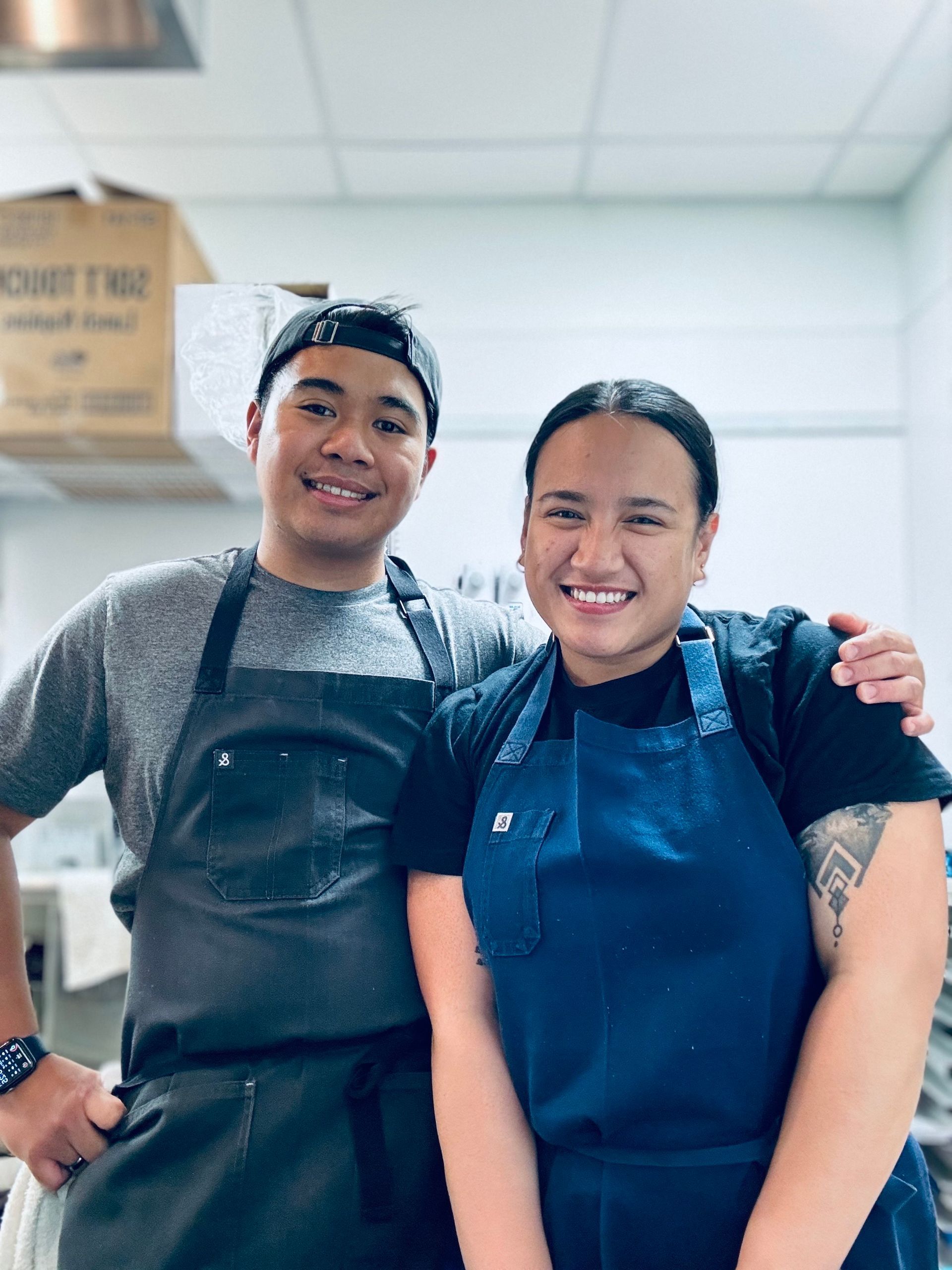
Two people in aprons smiling, standing in a kitchen.

Leaño is proud of the Filipino comfort food he serves, and the barbecue he brings to his dishes. He also uses a shrimp paste that he wasn’t sure would be accepted by non-Filipinos, but has become a house specialty. “Everybody just loves it,” he says, beaming as he serves a salty, umami-packed taste. “It’s something that’s different, like my mom used to do.”


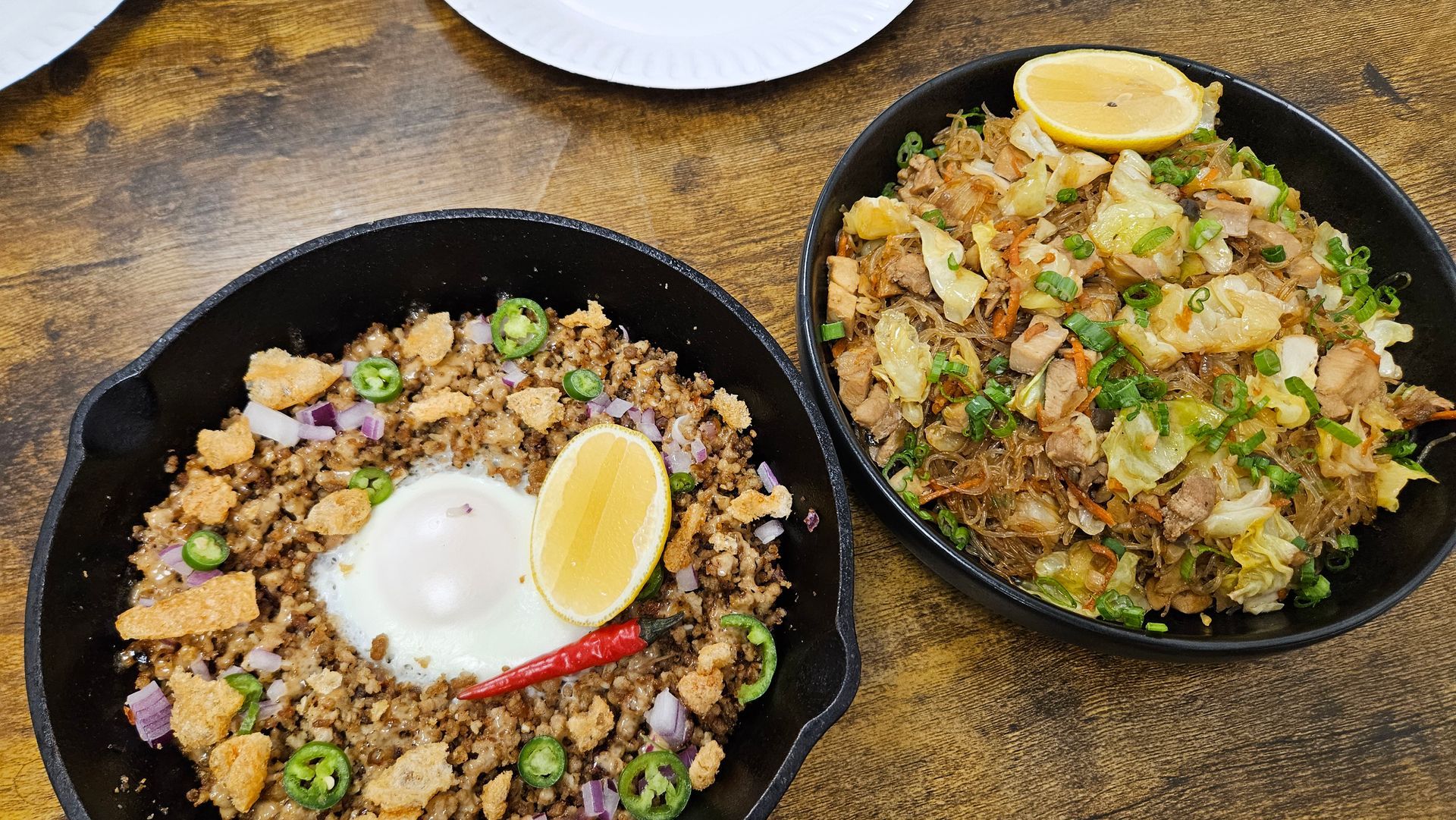
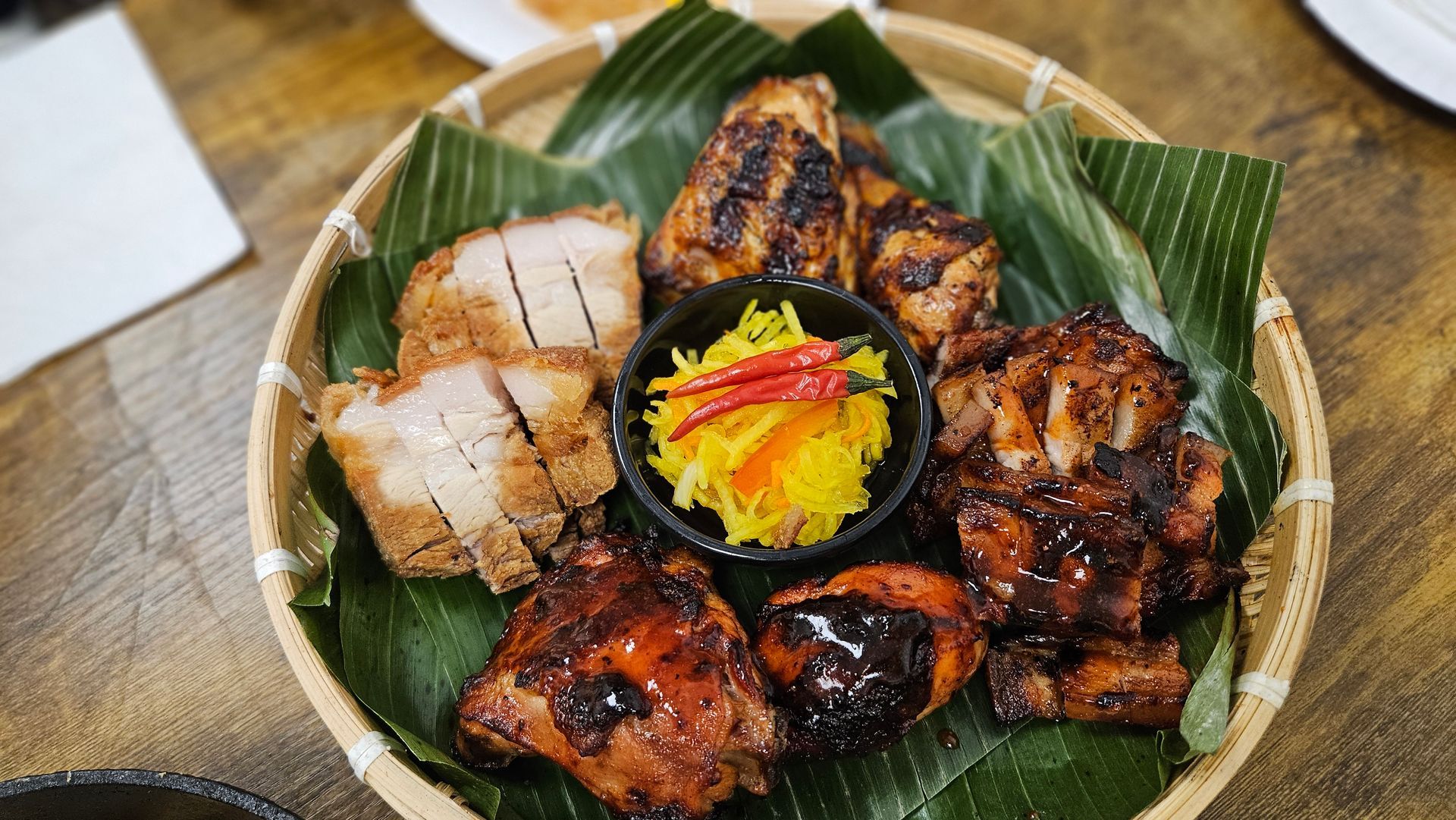
For this private tasting, he shared menu items including Sisig Ni Kuya (Java rice, minced pork, grilled pork mask, chicharron, green peppers, red onion, red chili, soy-lime mayo, lemon), Combination Grilled Pork Belly, Lechon Kawali, Chicken BBQ (grilled with the popular Filipino condiment Banana Ketchup), crunchy Lumpia Shorties and more.


According to Leaño, Paborito’s barbecue showcases two strains of Filipino cooking. Inasal, a technique in Visayas, has a citrus-based marinade and is basted with aromatic oil. The classic Filipino BBQ, is best-known in Luzon, and uses the banana ketchup marinade that’s more on the sweet side. Both reflect their unique regional flavor and showcases the balance of sweet, salty, and smoky that makes Filipino BBQ so distinct.

Grilled meats platter with pickled vegetables on a woven basket lined with green leaves.

“Our goal is to keep representing Filipino food with pride and creativity while making it more visible and accessible in the local dining scene.”

He would love to open a brick-and-mortar restaurant someday, or even a food truck. He’s open to any possibility, including spreading Paborito as a franchise brand across the U.S. Or maybe his sauces will be bottled and sold in retail shops everywhere. This young man dreams big.


“What makes Paborito unique is that we started as a humble ghost kitchen, focused simply on sharing the Filipino flavors we grew up with,” he says. “But, now, Denver gets to witness our growth as we continue to thrive and explore new possibilities. Our goal is to keep representing Filipino food with pride and creativity while making it more visible and accessible in the local dining scene.”


Of the dishes he’s most proud of, he says, “Pork sisig best embodies the soul of Paborito. It’s made from minced pork mask and ears, parts that are often overlooked yet we turn them into something incredibly delicious. That dish represents the Filipino spirit. Our ability to make something wonderful out of humble ingredients, to face challenges with creativity and a smile even in the midst of hardship. It’s comfort food, but it’s also a story of resilience and pride.”


That spirit resides in the soul of this takeout business. He adds, “The future is bright, and I’m excited to see where it takes us.”

Follow Paborito for menu updates and pop-events at instagram.com/paborito_denver.

Discover More Features

By Mary Jeneverre Schultz January 1, 2026
The Asian Book Bazaar on December 11, 2025, wasn’t just a marketplace; it was a high-profile gathering of some of Colorado’s most influential AANHPI literary and culinary figures, hosted by Colorado Asian Culture and Education Network at the Social Fabric Hub. The event featured a diverse lineup of creators whose work spans from award-winning children’s literature to investigative journalism and historical cookbooks.
By Jadyn Nguyen January 1, 2026
What would it look like for Asian American children to feel confident as their authentic selves? Growing up between cultures often teaches them how to make themselves smaller rather than how to belong. This question is what Sophia Siong sought to better understand. Her story is about choosing wholeness in a world that so often asks Asian Americans to diminish themselves. Sophia Siong, is a recent graduate of Regis University, who is leading community research on how Hmong Americans find belonging. Just north of Denver in cities like Westminster and Thornton is where many Hmong American families reside.  According to the Pew Research Center, 360,000 people in the United States identified as Hmong in 2023. Hmong are often seen as an ‘ethnic minority,’ which gives more reason to speak about and share their culture proudly.
By Stacey Vanhoy January 1, 2026
For more than two decades, the Nathan Yip Foundation has carried forward a legacy rooted in compassion, vision, and the belief that where a child lives should never determine what they can become. So, each year the foundation hosts a Chinese New Year Gala to raise critical funds for rural education and recognize an outstanding member of the community. Nathan Yip was just 19 years old when his life was tragically cut short in a car accident. He was Linda and Jimmy Yip’s only child, remembered for his kindness, curiosity, and deep empathy for others. While traveling in rural China, Nathan saw educational inequity firsthand, telling his parents, “We can make a difference.” Jimmy and Linda Yip transformed grief into purpose. In 2002, they founded the Nathan Yip Foundation to honor Nathan’s dream and extend hope to children in underserved communities. While the foundation’s early work focused internationally, its mission soon expanded closer to home, where rural Colorado students faced many of the same systemic inequities. Over the past ten years, the Nathan Yip Foundation has become a trusted champion for rural education in Colorado, investing more than $1.4 million in locally driven initiatives. These investments have modernized science labs, expanded career and technical education, and strengthened arts and creative programs. Rural school districts across Colorado face compounding challenges: shrinking tax bases, declining enrollment, persistent teacher shortages, limited access to advanced coursework, and reduced mental health and student support services. These pressures stretch already-limited resources and force difficult tradeoffs, even as educators remain deeply committed to their students and communities. Beginning this year, the foundation is launching a multi-year grant model that will support 5–7 rural school districts in its first cohort. These sustained partnerships are designed to create deeper, more lasting impact that will empower teacher-led, district-supported teams to design innovative solutions aligned to local needs. The response has been extraordinary, with 46 rural school districts applying and requesting more than $3.4 million in funding. This level of demand underscores the depth of need across rural Colorado. That is why the 2026 Chinese New Year Gala is more important than ever. The gala will raise the funds needed to expand the foundation’s capacity.  This year’s gala will honor Dr. Larry Chan for his extraordinary service to the Nathan Yip Foundation as a founding board member, and his 40 plus years to the University of Colorado School of Medicine. Dr. Chan embodies the values of service, generosity, and leadership that define this work.