Building Bridges Between Taiwan and Colorado: Director General Debby Huang on strengthening partnerships across the region
Annie VanDan • September 15, 2026

Whether she is meeting with a governor, visiting a university, talking with business leaders or attending a community festival, Director General Debby Huang has a consistent goal: connect people with Taiwan.


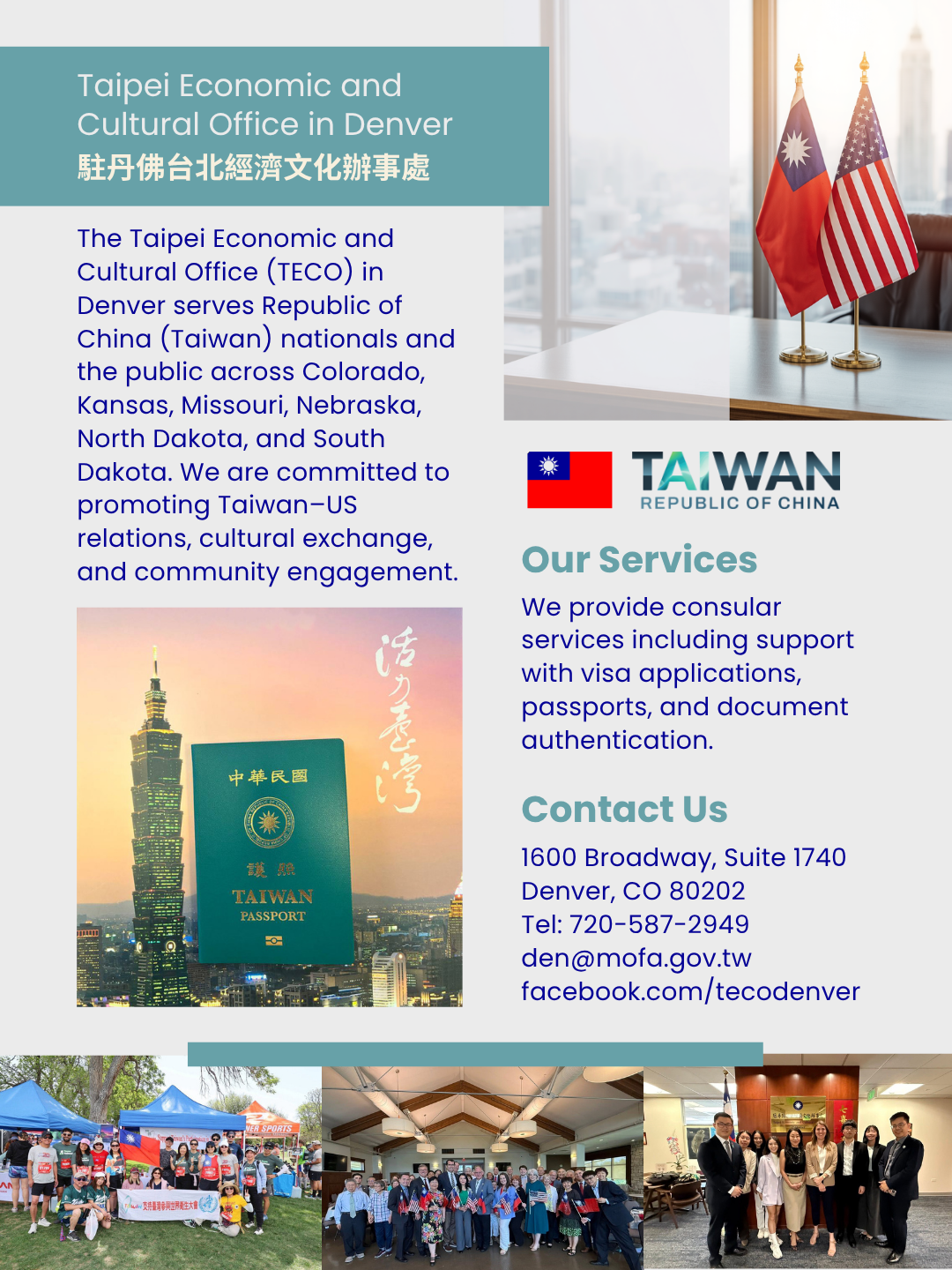
As Director General of the Taipei Economic and Cultural Office (TECO) in Denver, Huang represents Taiwan across a six-state region that includes Colorado, Kansas, Missouri, Nebraska, North Dakota and South Dakota. Her responsibilities range from government and economic relations to education, cultural exchange, community engagement and consular services.


But at the heart of her work, she says, is helping people understand Taiwan—and recognizing the many ways Colorado and Taiwan can work together.


“My goal is to help people better understand Taiwan and identify areas where we can work together,” Huang said.


Huang wants people to know that Taiwan is not a distant partner. Taiwan is here to help, and TECO Denver can help build the connections across communities.


“If you are interested in Taiwan, you should visit,” she said. “Do business, study in Taiwan, visit Taiwan—you can come to us to better understand Taiwan’s role in the world.”

More than semiconductors: A growing economic relationship

Taiwan is perhaps best known internationally for its semiconductor industry. But Huang believes there is a much bigger story to tell about the economic relationship between Taiwan and the United States.


Taiwan and the U.S. have developed deep and increasingly diverse economic ties, with Taiwanese companies expanding investments throughout the country in semiconductors, artificial intelligence, advanced manufacturing, electronics and other industries.


Huang pointed to approximately $265 billion in Taiwanese investment commitments in the United States as evidence of Taiwan’s long-term confidence in the American economy.


Importantly, those investments are not concentrated in one or two states.


“They are establishing operations and partnerships in states across the country,” Huang said. “This means that Taiwan-U.S. economic relations are increasingly becoming state-to-state and community-to-community relationships.”


That creates a natural opportunity for Colorado.


Colorado is a national leader in aerospace, quantum technology, research and innovation, while Taiwan brings world-class expertise in semiconductors, advanced manufacturing and electronics.


Huang sees those strengths as complementary.


“I see tremendous room for growth,” she said. “The foundation is already there. Now our task is to turn these connections into more investment, more partnerships, and more opportunities for people on both sides.”

A new chapter for Taiwan and Colorado

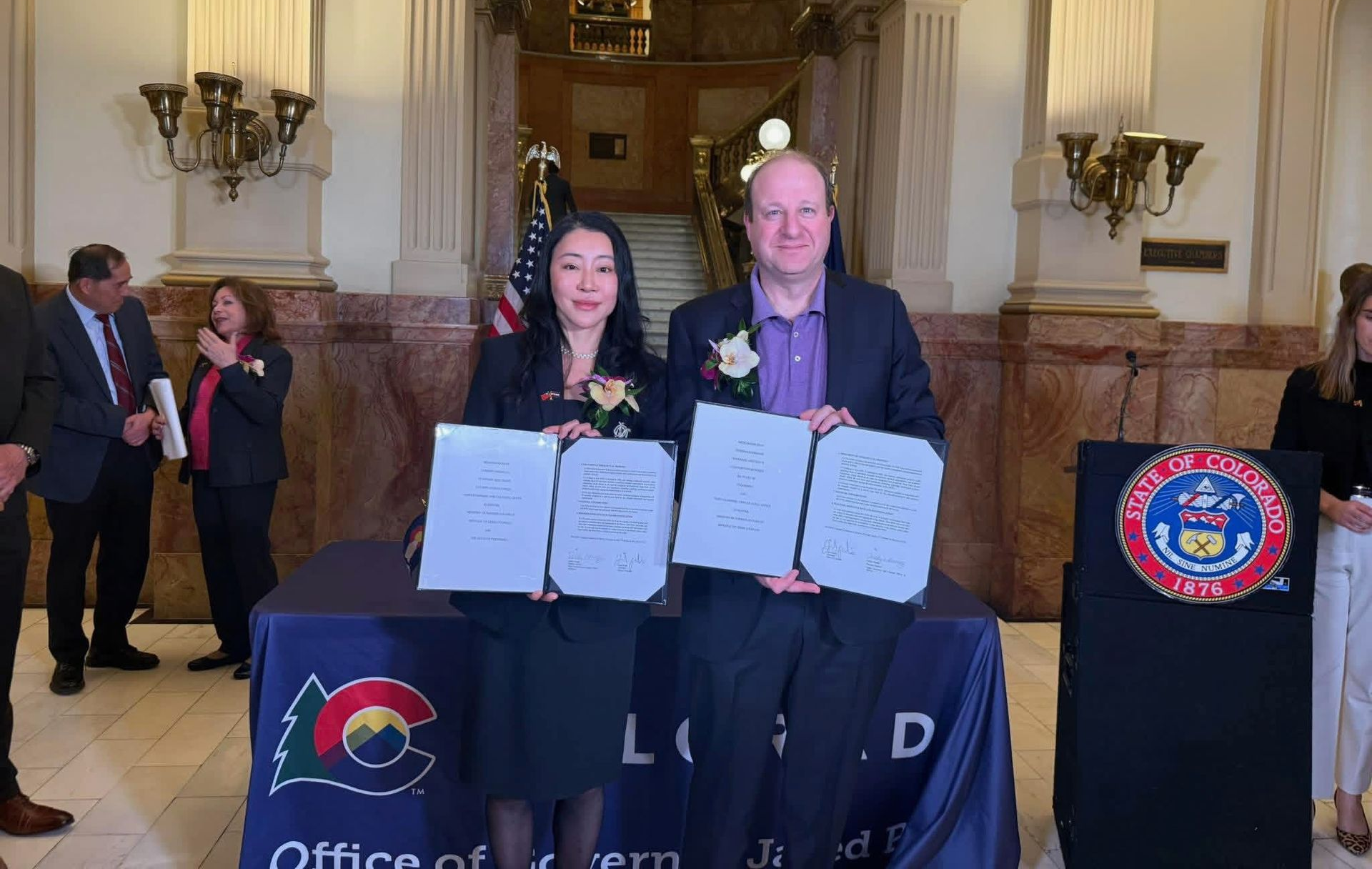
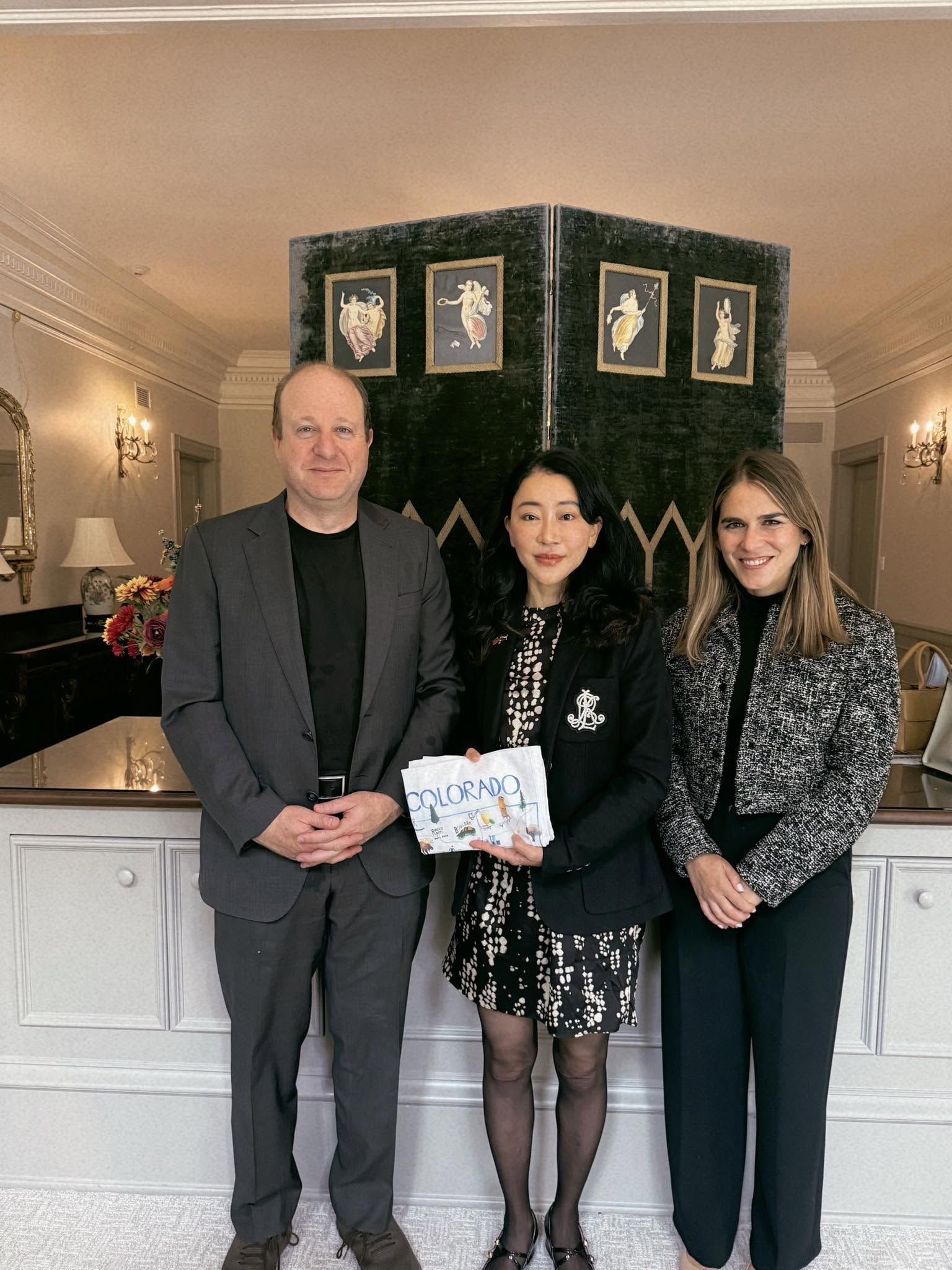
One significant milestone came earlier this year when Huang and Colorado Governor Jared Polis signed a Taiwan-Colorado Memorandum of Understanding covering areas including trade, investment, agriculture, education and talent exchange.


For Huang, the agreement represents more than a document. It is an opportunity to put greater focus on the relationship and identify tangible ways for businesses, universities and communities to work together.


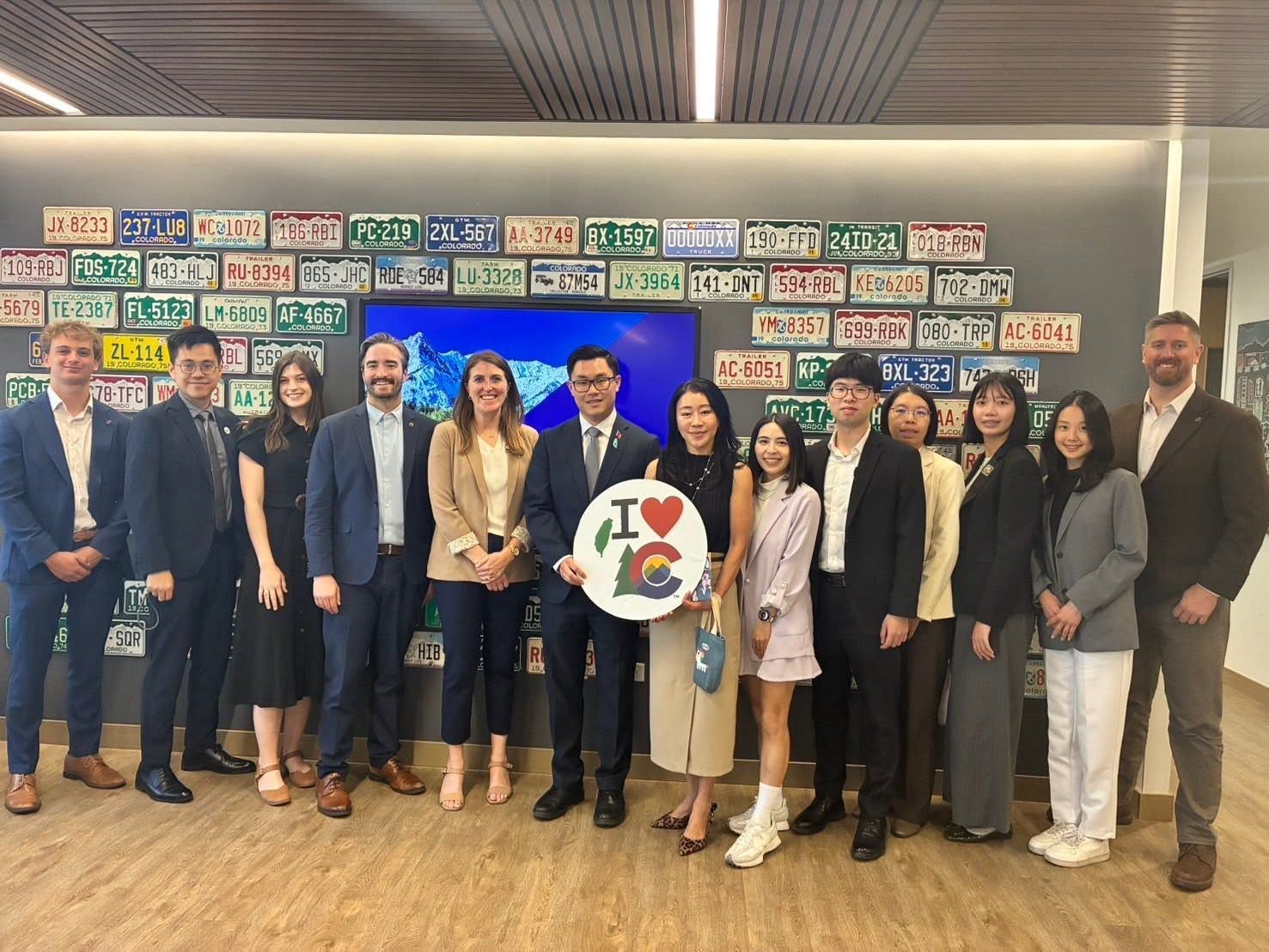
The Colorado Office of Economic Development and International Trade is also preparing to lead a delegation to Taiwan, creating another avenue for Colorado companies to explore opportunities in the Taiwanese market.


Huang describes TECO’s role as that of a matchmaker—connecting Colorado leaders and businesses with potential Taiwanese partners.


“We want to see if we can persuade high-tech companies in Taiwan to come to Colorado and invest in Colorado,” she said.


She also sees potential beyond technology.


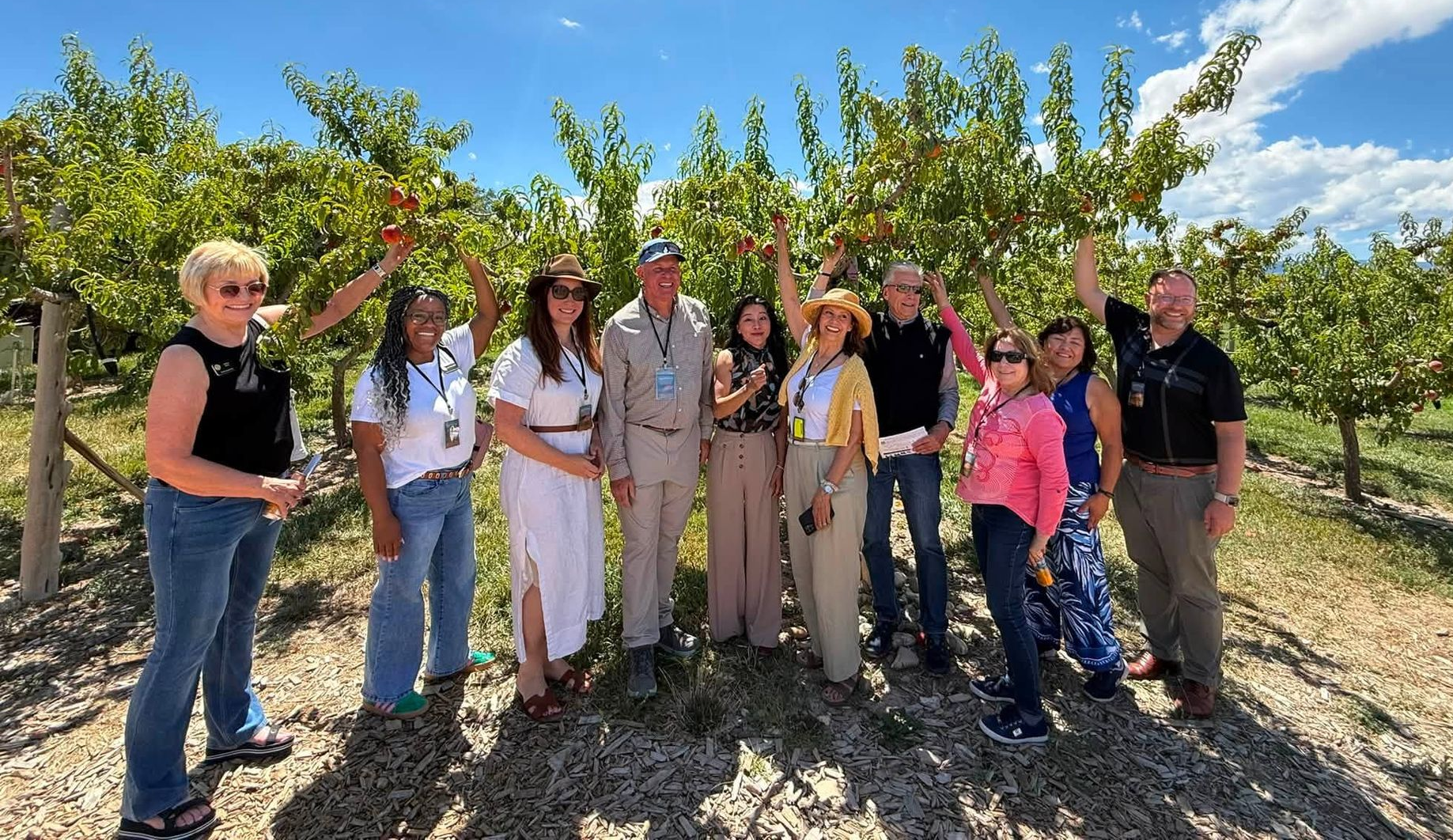
During a recent visit to Palisade, Colorado, Huang joined local officials and representatives from other diplomatic offices to experience the region’s agriculture and agritourism—including peaches, apples, wineries and local businesses.


The immediate opportunity may be helping Colorado agricultural producers reach Taiwanese consumers. But Huang says the larger goal is building relationships that can grow over time.


“We think about how we can do more for a long-term relationship with Taiwan,” she said. “One way is through agriculture.”


That state-to-state approach is part of a larger shift in how Huang views Taiwan-U.S. relations.


The relationship is no longer simply centered in Washington, D.C. Huang noted that U.S. federal agencies—including the Departments of State, Commerce and Agriculture—have encouraged state and local governments and business organizations to deepen engagement with Taiwan.


“Stronger relations with Taiwan are not only a foreign policy issue,” Huang said. “They can create real economic, educational, agricultural and technological opportunities for American states and communities.”

Taiwan’s message to the international community: We can help

While economic development is an important part of Huang’s work, she also wants Coloradans to understand another dimension of Taiwan’s international role.


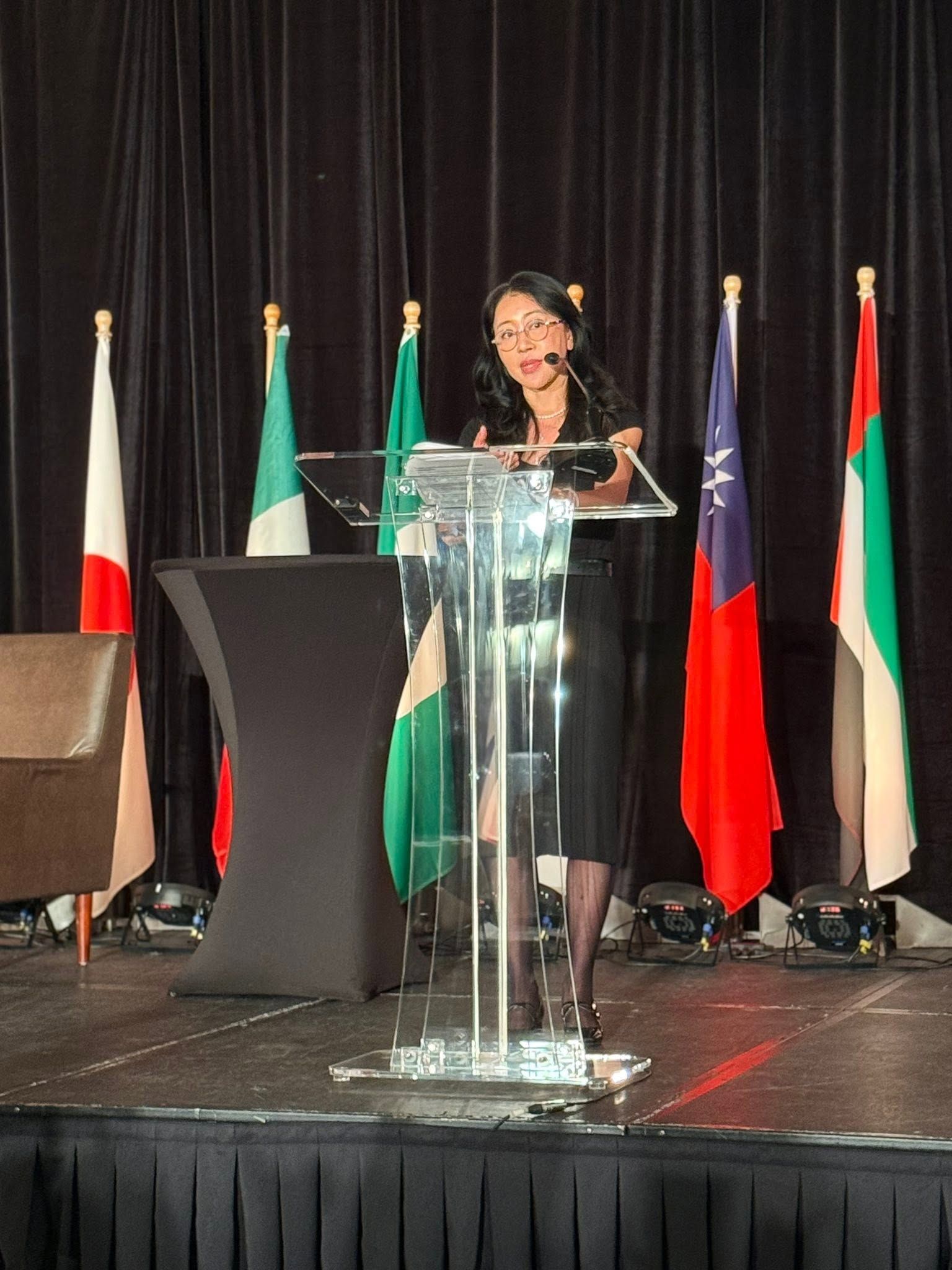
Taiwan has long sought greater participation in international organizations, including the United Nations and the World Health Organization. Huang argues that Taiwan’s exclusion prevents the international community from fully benefiting from Taiwan’s expertise and experience.


She particularly points to Taiwan’s healthcare system and its experience responding to public health emergencies such as SARS and COVID-19.

“We are willing to help,” Huang emphasized.She notes that Taiwan is a vibrant democracy of 23 million people. “This year marks 30 years since Taiwan held its first direct presidential election in 1996. We have built a free and open society with competitive elections, peaceful transfers of power, a free press, and a very active civil society. Yet despite everything Taiwan has achieved, our 23 million people are still excluded from the United Nations and many international organizations.”


Her message is that Taiwan has knowledge, expertise and resources that can benefit the world.


Huang is particularly focused on the interpretation of United Nations General Assembly Resolution 2758, which addressed the question of China’s representation at the United Nations.


According to Huang, the resolution did not resolve the broader question of Taiwan’s participation in international organizations, yet she believes China has used its interpretation of the resolution to oppose Taiwan’s involvement in international forums.


As the United Nations General Assembly prepares to convene in New York in September, Huang hopes more people will understand Taiwan’s perspective.


“Taiwan is ready and willing to contribute,” she said. “We simply ask for the opportunity to participate meaningfully.”


Raising awareness about transnational repression

Another issue Huang believes deserves greater attention is transnational repression, the use of intimidation, harassment, surveillance or other forms of pressure by governments beyond their own borders to silence critics and political opponents.


Huang sees this as a concern not only for Taiwan, but for anyone who speaks publicly about issues involving China.


She pointed to cases involving journalists, activists and politicians as examples of what she describes as China’s efforts to intimidate voices.


“It is important for Americans to understand that the challenge posed by authoritarianism does not always stop at national borders,” she said.


She referenced the case of Hong Kong media executive Jimmy Lai, a British citizen who has been imprisoned in Hong Kong, as an example of the broader concerns surrounding the reach of China’s legal and political system.


For her, it is about whether people can speak freely without fear of repercussions outside their own country’s borders.


She also pointed to concerns involving Taiwanese lawmakers and advocates who speak openly about China’s actions.


“People living in a free society should be able to speak openly, participate in community activities, and express their identity without fearing pressure from a foreign government,” Huand said. “That is why Taiwan believes democracies need to recognize transnational repression for what it is and work together to protect the open civic space that allows our communities to thrive.”


She hopes Colorado leaders and the broader American public will continue learning about these challenges while maintaining opportunities for dialogue and engagement.

Connecting communities, not just governments

One of the most personal aspects of Huang’s work is her engagement with Colorado’s Asian American and Taiwanese communities.


She says she has been impressed by the strength and diversity of the communities she has encountered since arriving in Colorado.


Taiwanese Americans have established businesses, cultural institutions, Chinese schools and community organizations, while the broader Asian American community has created its own networks of support and collaboration.


“These communities are not simply cultural bridges,” Huang said. “They are also important participants in business, education, civic life and public service.”


She has also made a point of supporting cultural events and community organizations, including Taiwanese film programming and local Asian American initiatives.


Huang emphasized that strengthening Taiwan-Colorado relationships is not the responsibility of one organization.


“It is not one community, or one organization,” she said. “It is all the communities coming together.”


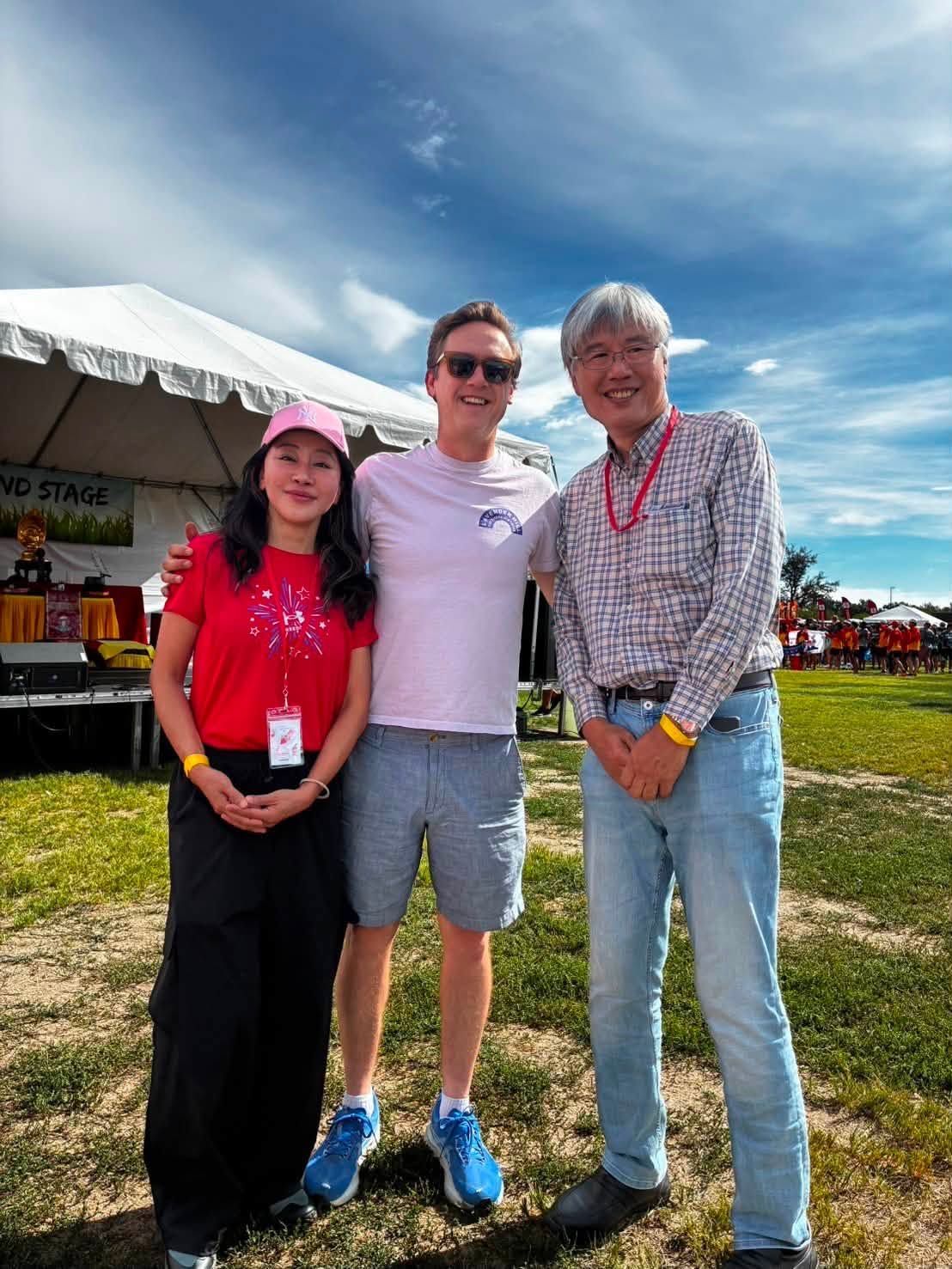
She sees events such as Taiwan Day at Coors Field as opportunities not only to celebrate Taiwanese culture, but also to bring together business leaders, government officials and community members.


The event, organized with the Taiwanese Chamber of Commerce, provides opportunities for networking and greater visibility for the Taiwanese business community.


An invitation to visit and better understand Taiwan

Huang’s vision for TECO Denver is ultimately grounded in accessibility. She wants elected officials, businesses, universities, community organizations, students and individuals throughout the six-state region to see Taiwan as a partner they can engage with directly. She hopes Colorado legislators, state and local officials, business leaders and journalists will visit Taiwan to experience the country firsthand.


And that is also the spirit behind inviting Asian Avenue Magazine to participate in a media tour of Taiwan this year.


“I want American journalists to see Taiwan as it really is: a diverse, democratic, creative and open society. I want them to meet our people, experience our culture, visit our businesses and universities, and see how democracy functions in everyday life,” she said.


Taiwan is more than semiconductors. It is a place of innovation, agriculture, culture, democracy, healthcare, entrepreneurship and community. And Colorado, she believes, has much to offer in return.


“I see tremendous room for growth,” Huang said.


As Taiwan and Colorado continue developing their relationship, Huang’s role is to help turn that potential into real connections throughout the region.

The Taiwan-Colorado MOU was signed by Director General Debby Huang and Governor Jared Polis to deepen economic, technological, and agricultural ties by emphasizing:


Advanced Technology

Boost collaboration and research in quantum technology, photonics, 

and semiconductors.


Precision Agriculture

Expand trade, investment, and innovative agricultural practices.


Professional Exchange

Promote talent sharing, economic cooperation, and supply chain diversification.

Follow the Taiwan in Denver Facebook page to stay updated on TECO in Denver events.

Discover More Features

By Annie Guo VanDan June 1, 2026
In 2006, before Instagram, before TikTok, and before “AANHPI” became part of mainstream conversations, there was a simple but powerful idea: Colorado’s Asian American community deserved to be seen. That idea became Asian Avenue Magazine . What started as a grassroots publication has grown over the past twenty years into a platform that has celebrated culture, amplified voices, supported local businesses, and documented the stories of Colorado’s Asian American, Native Hawaiian, and Pacific Islander (AANHPI) communities. At the time, there were few spaces where Asian Americans in Colorado could consistently see themselves reflected in local media. Community events often spread through word of mouth. Cultural organizations worked in their silos. Businesses had limited ways to reach Asian audiences. And many second- and third- generation Asian Americans were still searching for a stronger sense of identity and belonging. Asian Avenue became a connector. Issue after issue, the magazine highlighted community leaders, artists, entrepreneurs, nonprofits, students, restaurants, festivals, and families. It celebrated milestones and traditions while also addressing difficult conversations around identity, mental health, representation, immigration, and belonging. As we celebrate 20 years of the magazine next month (July 2026), we have seen how the publication has evolved alongside the community itself. What began primarily as a print magazine expanded into community events, partnerships and connections across Colorado. The growth reflected a larger transformation happening nationwide: AANHPIs becoming more visible, more vocal, and more engaged in civic and cultural life. This looked like young women becoming lifelong friends through the Miss Asian American Colorado Leadership Program, organizing high school student conferences with Next Generation Voices, bringing people together to try new restaurants with the Joy of Living Club, and many, many Lunar New Year dinner celebrations over the years! For many readers, Asian Avenue was more than a magazine. It was where they discovered local events, found businesses, celebrated achievements that mainstream media often overlooked, and felt connected to something larger than themselves. It was the first publication they grabbed when landing at the DEN airport. The past twenty years have not been without challenges. Print media has faced enormous changes with increases in paper and gas, and less advertisers as businesses move towards digital. During the COVID-19 pandemic and the rise in anti-Asian hate incidents, the importance of trusted community storytelling became even more clear. Through it all, Asian Avenue continued to show up — not just as a publication, but as a community platform. Thank you to the readers who picked up the very first issues in 2006. To the advertisers who supported us. To the writers, photographers, interns, volunteers, and community partners who contributed their voices and talents. And to the countless individuals and organizations whose stories filled these pages over the years.
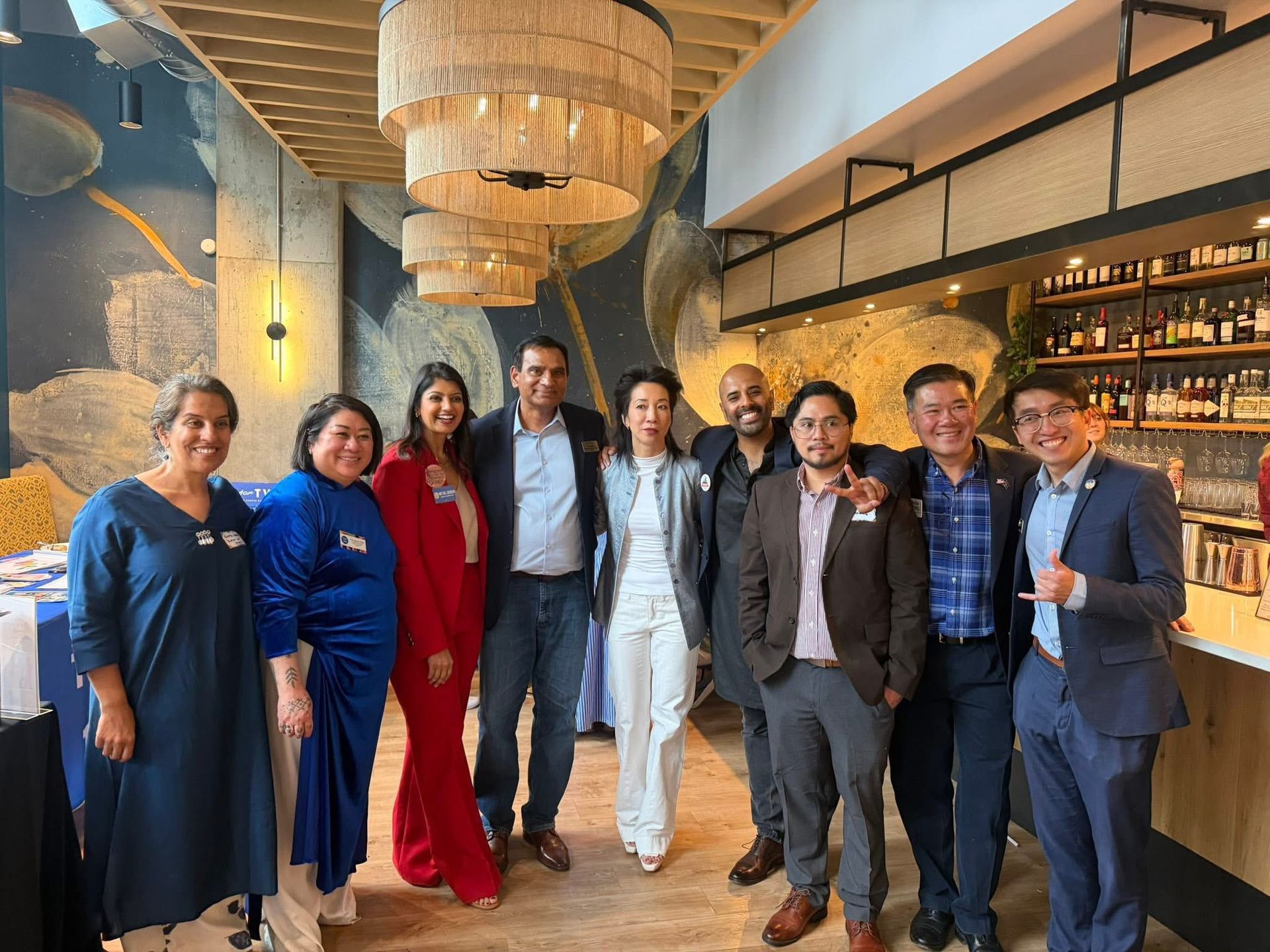
Group of people posing in a stylish restaurant with chandeliers, smiling and dressed in formal and colorful attire
By Asian Avenue Staff June 1, 2026
Meet Colorado’s Asian American candidates, Dr. Alexander Africa, Hetal Doshi, & Kenny Nguyen. Learn about their advocacy for community engagement.
By Asian Avenue Staff June 1, 2026
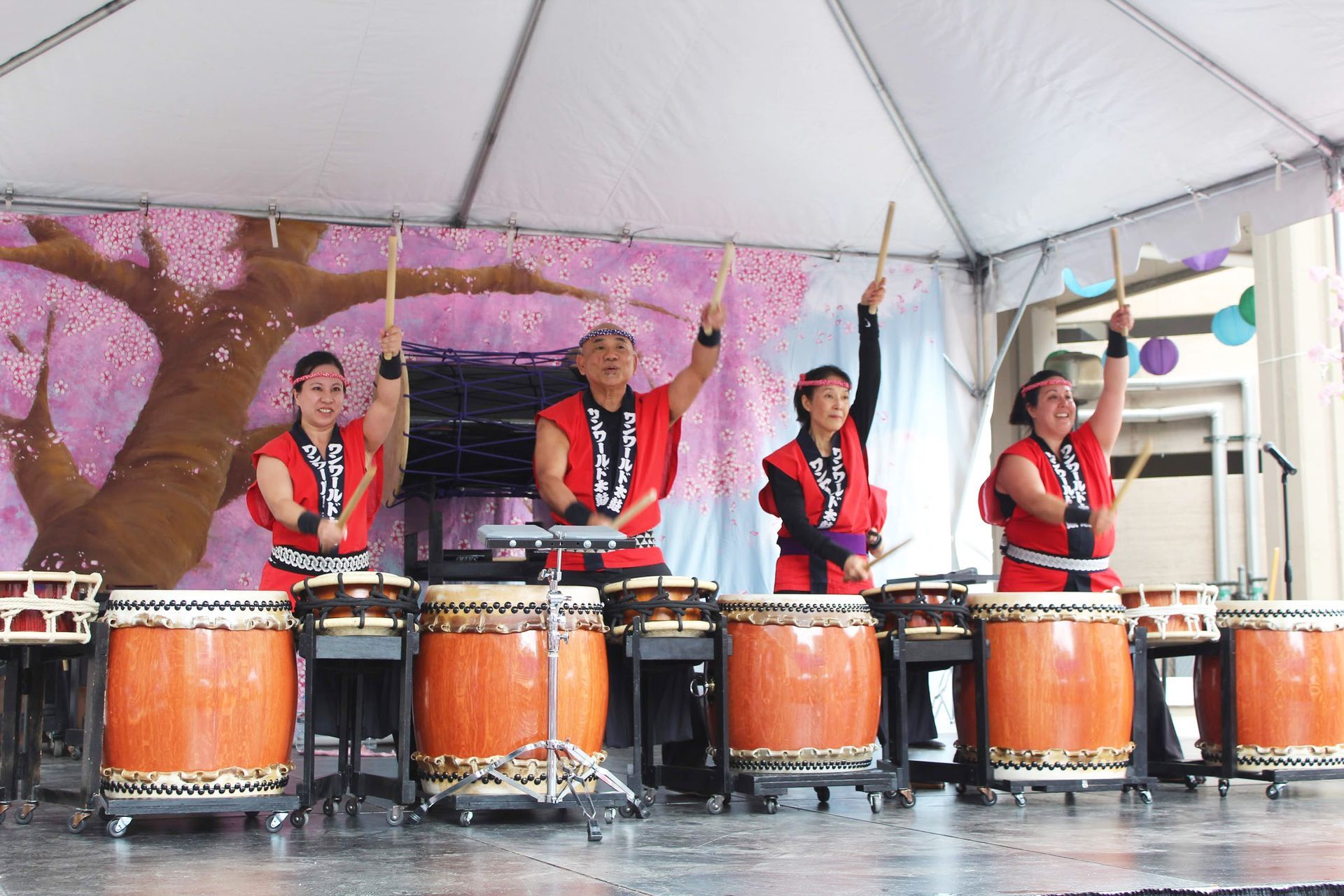
Not every city has a Sakura Matsuri but Denver does, and it keeps getting better! The Denver Cherry Blossom Festival returns for another spectacular weekend of Japanese culture, food, and community at Sakura Square, 1255 19th Street, on June 27 and 28. As always, it’s FREE and open to everyone. Saturday morning kicks off on the live stage with pulse-quickening taiko drumming, followed by a full stage of minyo folk dancers, koto players, enka singers, and martial artists. Temple children and youth perform throughout the weekend, and this year brings an exciting new addition: Ryu Japan, a Japanese singer-songwriter whose original music bridges cultures and moves hearts.  The Marketplace features over 40 vendors offering traditional textiles, handcrafted art, contemporary Japanese fashion, anime, and pop culture finds. There’s something around every corner to spark your curiosity and send you home with a smile. Come hungry! Cool down with an ice-cold Asahi or crisp sake, then dig into a teriyaki burger, SPAM musubi, chicken bento box, and more. Food is available inside the Temple and at the outdoor marketplace booth, with dining areas under the Temple (enter from 20th Street), in the 19th Street plaza, and near the live stage. Families won’t want to miss a celebration of the book Unbreakable: A Japanese American Family in an American Incarceration Camp by Minoru Tonai, Jolene Gutiérrez, and Chris Sasaki. Author Jolene Gutiérrez will be on hand to read and discuss this moving children’s book about resilience, identity, and inner strength. Check the festival website soon for day and time. For parking, transit, performance schedule, and vendor info, visit cherryblossomdenver.org . Whether it’s your first visit or your fifteenth, Sakura Matsuri is a summer tradition worth making your own.