The Community Aurora Taught Me: Ambassador64 Notes from Arapahoe County
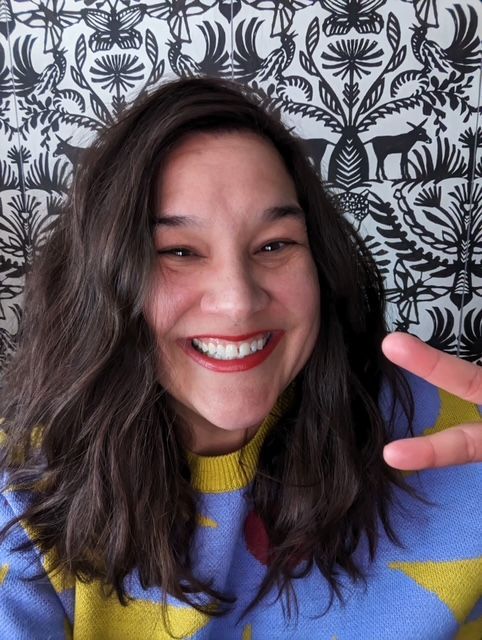
Maureen Maycheco • October 1, 2025

 Rocky Mountain Public Media, the home of Rocky Mountain PBS, KUVO Jazz, and TheDrop303 has a partnership with Colorado Ethnic Media Exchange to launch this monthly essay series, as part of our vision to co-create a Colorado where everyone feels seen and heard. 

 These stories are sourced from community members across the state—told in their own words and selected from our 64-county community ambassador program. They are not editorial products of our journalism team, but are first-person reflections on life in Colorado - building bridges through empathy. Learn more about all of our brands and content at  www.rmpbs.org/about

This is a subtitle for your new post

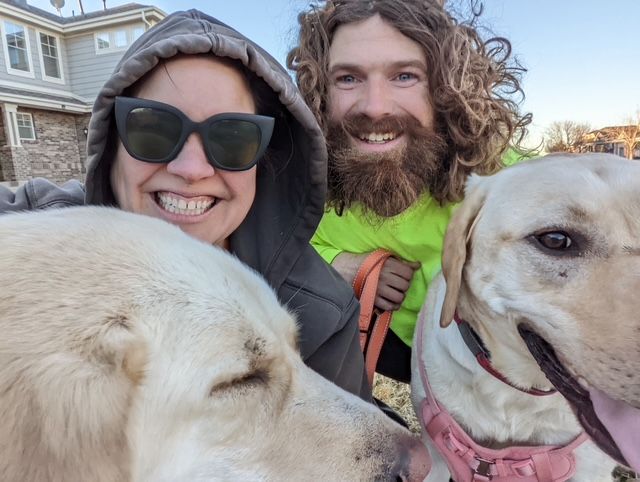
I love Aurora. I say that without hesitation, without apology, and with a kind of deep pride that feels rooted in my bones. Aurora is home, not just because I live here, but because it has taught me what community truly means.


In Aurora, community is a lived experience. It is exchanged through a bag of tomatoes over the fence, through a knock on the door to check in on a neighbor, through the unspoken understanding that we are looking out for one another.


My neighborhood is stitched together with people from all over the world, refugees, immigrants, and families, who carry with them stories, recipes, music, languages, and traditions that make Aurora one of the most diverse cities in the country.


This diversity is not something I observe from a distance; it’s what I participate in every day. I have a food-trade system with my neighbors: herbs for eggrolls, squash for eggs. We share abundance, and in doing so, we share pieces of ourselves. It is a quiet, powerful act of belonging.


Serving on Aurora’s Immigrant and Refugee Commission (AIRC) has given me another vantage point on this truth. I’ve seen how Aurora becomes both a sanctuary and a launchpad for families who have crossed oceans, borders, and hardships. I’ve listened to their concerns about housing, health care, schools, By Maureen Maycheco (she/they) Vice President of Strategic Partnership and Growth at COLOR, and 80013 resident and safety, and I’ve seen how, despite obstacles, they continue to give back, to contribute, to weave themselves into the fabric of this city. Aurora doesn’t just welcome, it absorbs, transforms, and reflects back the richness of the world.


But loving Aurora also means understanding the challenges we face. Our diversity, our collective strength, and the way we care for each other are all things that challenge systems built on exclusion and control. 

Too often, Aurora is spoken about in headlines that reduce us to crime statistics or deficits, instead of celebrating us as a model of shared humanity. What they miss is that the very thing they point to, our difference, is our power. It’s a power we must protect and nurture, a responsibility we all share.


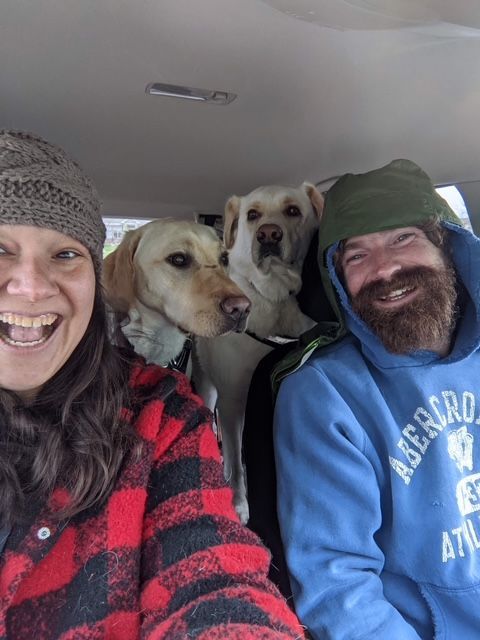
That power goes beyond city borders. Today, as I sat in an Indigenous tattoo shop in Denver, my partner getting his first tattoo as part of a fundraiser for the Colorado Immigrant Rights Coalition (CIRC), I felt it again: community is expansive. The people CIRC serves are my people. The families COLOR (the organization where I work) stand alongside immigrants, Latine, young, low-income, LGBTQ+, are my people. When I show up there, I am showing up for Aurora too, because community is not a zip code. It is a responsibility. It is love in action.


There are versions of “community” that are about individualism and ego, about curating the right neighborhood, the right coffee shop, the right school. But the kind of community Aurora teaches me every day is different. It is ancestral. It is energetic. It is about what is shared, not what is owned. It humbles me, and it calls me to keep giving.


When I stretch my arms wide and think of Aurora, I don’t just see my street. I see the vast web of neighbors who check on each other, the families building new lives with courage, the children running between backyards, the elders passing down knowledge, and the organizers fighting for dignity and rights. That web stretches outward into Denver, into Colorado, into every place where care outshines ego and solidarity outlasts division.


And right now, as I walk back from my garden, arms full of tomatoes and herbs to share, I feel it: this is community. Aurora taught me that when we give, we are never empty; we are woven tighter together. That is why I love it here, fiercely, endlessly, with all of me.

We Want to Hear from You

We’re inviting community members across the state to share their own stories of living in Colorado—of identity, discovery, and what it means to belong. Tell us about a moment or a place in Colorado that changed how you see yourself or your community.

Share your reflections at ambassador64@rmpbs.org

This is part of Ambassador64, our statewide listening initiative to ensure public media reflects the voices of all 64 counties in Colorado—starting with yours.

Discover More Features

By Mary Jeneverre Schultz January 1, 2026
The Asian Book Bazaar on December 11, 2025, wasn’t just a marketplace; it was a high-profile gathering of some of Colorado’s most influential AANHPI literary and culinary figures, hosted by Colorado Asian Culture and Education Network at the Social Fabric Hub. The event featured a diverse lineup of creators whose work spans from award-winning children’s literature to investigative journalism and historical cookbooks.
By Jadyn Nguyen January 1, 2026
What would it look like for Asian American children to feel confident as their authentic selves? Growing up between cultures often teaches them how to make themselves smaller rather than how to belong. This question is what Sophia Siong sought to better understand. Her story is about choosing wholeness in a world that so often asks Asian Americans to diminish themselves. Sophia Siong, is a recent graduate of Regis University, who is leading community research on how Hmong Americans find belonging. Just north of Denver in cities like Westminster and Thornton is where many Hmong American families reside.  According to the Pew Research Center, 360,000 people in the United States identified as Hmong in 2023. Hmong are often seen as an ‘ethnic minority,’ which gives more reason to speak about and share their culture proudly.
By Stacey Vanhoy January 1, 2026
For more than two decades, the Nathan Yip Foundation has carried forward a legacy rooted in compassion, vision, and the belief that where a child lives should never determine what they can become. So, each year the foundation hosts a Chinese New Year Gala to raise critical funds for rural education and recognize an outstanding member of the community. Nathan Yip was just 19 years old when his life was tragically cut short in a car accident. He was Linda and Jimmy Yip’s only child, remembered for his kindness, curiosity, and deep empathy for others. While traveling in rural China, Nathan saw educational inequity firsthand, telling his parents, “We can make a difference.” Jimmy and Linda Yip transformed grief into purpose. In 2002, they founded the Nathan Yip Foundation to honor Nathan’s dream and extend hope to children in underserved communities. While the foundation’s early work focused internationally, its mission soon expanded closer to home, where rural Colorado students faced many of the same systemic inequities. Over the past ten years, the Nathan Yip Foundation has become a trusted champion for rural education in Colorado, investing more than $1.4 million in locally driven initiatives. These investments have modernized science labs, expanded career and technical education, and strengthened arts and creative programs. Rural school districts across Colorado face compounding challenges: shrinking tax bases, declining enrollment, persistent teacher shortages, limited access to advanced coursework, and reduced mental health and student support services. These pressures stretch already-limited resources and force difficult tradeoffs, even as educators remain deeply committed to their students and communities. Beginning this year, the foundation is launching a multi-year grant model that will support 5–7 rural school districts in its first cohort. These sustained partnerships are designed to create deeper, more lasting impact that will empower teacher-led, district-supported teams to design innovative solutions aligned to local needs. The response has been extraordinary, with 46 rural school districts applying and requesting more than $3.4 million in funding. This level of demand underscores the depth of need across rural Colorado. That is why the 2026 Chinese New Year Gala is more important than ever. The gala will raise the funds needed to expand the foundation’s capacity.  This year’s gala will honor Dr. Larry Chan for his extraordinary service to the Nathan Yip Foundation as a founding board member, and his 40 plus years to the University of Colorado School of Medicine. Dr. Chan embodies the values of service, generosity, and leadership that define this work.